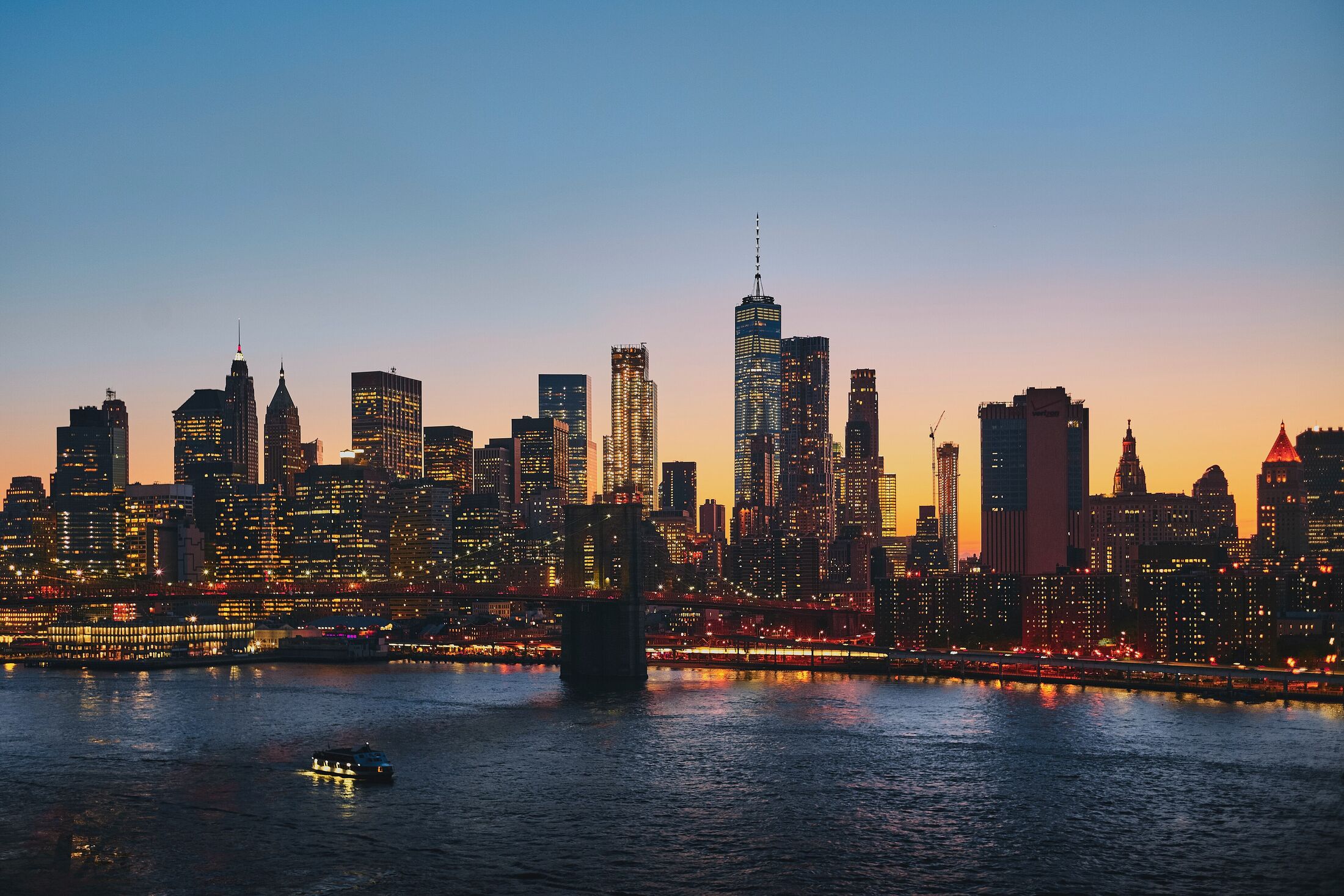
Manhattan · Downtown Manhattan
Stuyvesant Town and Peter Cooper Village real estate guide
Stuyvesant Town and Peter Cooper Village are a pair of adjoining residential complexes on Manhattan's East Side, occupying about 80 acres between East 14th and East 23rd Streets from First Avenue to Avenue C and the FDR Drive. Developed by the Metropolitan Life Insurance Company and completed in the late 1940s, they replaced dozens of blocks of tenements and industrial buildings with 110 red brick apartment buildings set among lawns, playgrounds and tree-lined paths, closed to through traffic. Together they hold about 11,250 apartments. Importantly for anyone considering a purchase, the complex is almost entirely rental: apartments are leased, not sold, and are owned by a single landlord. Since 2015 it has been owned by Blackstone and Ivanhoé Cambridge, which agreed with the city to keep 5,000 apartments affordable for 20 years. For buyers, the relevant market is the surrounding co-op and condo neighborhoods.
Homes and buildings in Stuyvesant Town and Peter Cooper Village
The complex consists of 110 buildings: the larger Stuyvesant Town section south of 20th Street and the smaller Peter Cooper Village to the north, where apartments are generally larger. Units are rentals, a large share of them rent stabilized, under single ownership. There are no co-op or condominium units for sale within the complex. Owners nearby trade co-ops and condos in Gramercy, Kips Bay and the East Village, where the complex shapes the surrounding streetscape.
Streets, parks and landmarks
The defining feature is the campus plan: buildings of 13 and 14 stories arranged around a central oval, with internal paths and open lawns instead of the street grid. Planned by Gilmore Clarke and others, it is one of the most significant examples of postwar large-scale housing in the United States. First Avenue and 14th Street provide the retail edges, and Stuyvesant Cove Park and the East River Greenway lie just to the east.
Selling in Stuyvesant Town and Peter Cooper Village
Because apartments inside the complex are rentals, there is no resale market within it. The seller angle applies to nearby owners. For co-ops and condos on the surrounding blocks, the scale and stability of the complex is a fixed part of the setting, and sellers compare against Gramercy, Kips Bay and the East Village. Proximity to the L train at First Avenue, the M14 and M23 Select Bus Service, and East River access are factual points worth stating. Buyers often also weigh renting in the complex against buying nearby, so a clear analysis of ownership costs versus rent helps.
Compass market data: Compass counts Stuyvesant Town and Peter Cooper Village in its Downtown submarket. In Q3 2026 the Downtown submarket’s median sale price was $1,792,500 (+21.5% on a year earlier), on 890 closed sales (+9.9%). Source: Compass Manhattan Market Report Q3 2026 (data: REBNY RLS, ACRIS). NYC market data →
Get Gavin’s report for your building: recent sales in your line and nearby, and what they mean for your price. Free, no obligation.
Buying in Stuyvesant Town and Peter Cooper Village
Nothing inside the complex is for sale; leasing is handled by the owner. To buy nearby, look at Gramercy, Kips Bay and the East Village. The L train stops at First Avenue, and the M14 A and D and M23 Select Bus Service run along the edges. NYC Ferry stops at Stuyvesant Cove at East 20th Street.
Stuyvesant Town and Peter Cooper Village: frequently asked questions
Can you buy an apartment in Stuyvesant Town?
No. Stuyvesant Town and Peter Cooper Village is a rental complex under single ownership, so its roughly 11,250 apartments are leased rather than sold. There are no co-op or condo units inside the complex. A conversion plan was proposed in the past but did not proceed. Buyers who like the location typically look at co-ops and condos in neighboring Gramercy, Kips Bay and the East Village.
Who owns Stuyvesant Town and Peter Cooper Village?
Since 2015 it has been owned by Blackstone together with Ivanhoé Cambridge. As part of the purchase, the owners reached an agreement with the City of New York to keep 5,000 apartments affordable to middle and lower income households for 20 years, in exchange for certain tax exemptions and financing. The original developer was the Metropolitan Life Insurance Company, which completed the complex in the late 1940s.
What is the difference between Stuyvesant Town and Peter Cooper Village?
They are two sections of one complex under the same ownership. Stuyvesant Town is the larger southern section, from East 14th to East 20th Street, and Peter Cooper Village is the smaller section from East 20th to East 23rd Street. Peter Cooper Village apartments are generally larger. Both share the same red brick architecture, internal paths and landscaped open space closed to car traffic.
Which transit serves Stuyvesant Town?
The L train stops at First Avenue and 14th Street, at the complex's southwest corner, connecting to Union Square and Brooklyn. The M14 A and D Select Bus Service runs along 14th Street and into the complex area, and the M23 Select Bus Service runs crosstown along 23rd Street. NYC Ferry stops at Stuyvesant Cove near East 20th Street, with service along the East River.
Sources: nyc.gov, new.mta.info, ferry.nyc. Neighborhood boundaries are customary and vary by source. Updated October 2026.
More in Downtown Manhattan