Manhattan · Downtown Manhattan
Chelsea real estate guide
Chelsea is a West Side neighborhood running roughly from 14th Street north to the 30s, between Sixth Avenue and the Hudson River. It takes its name from the eighteenth century estate of Major Thomas Clarke, a retired British officer, and his grandson Clement Clarke Moore later divided the land into the lots that became Chelsea's rowhouse blocks, setting aside a full block for the General Theological Seminary. In the late nineteenth century the waterfront filled with warehouses, factories and rail lines, and the elevated freight line built in the 1930s became the High Line park, which opened in stages starting in 2009. The Chelsea Historic District was designated in 1970 and extended in 1981, and the West Chelsea Historic District followed in 2008. Today Chelsea combines rowhouses, large prewar complexes, converted industrial buildings and new architect designed condominiums.
Homes and buildings in Chelsea
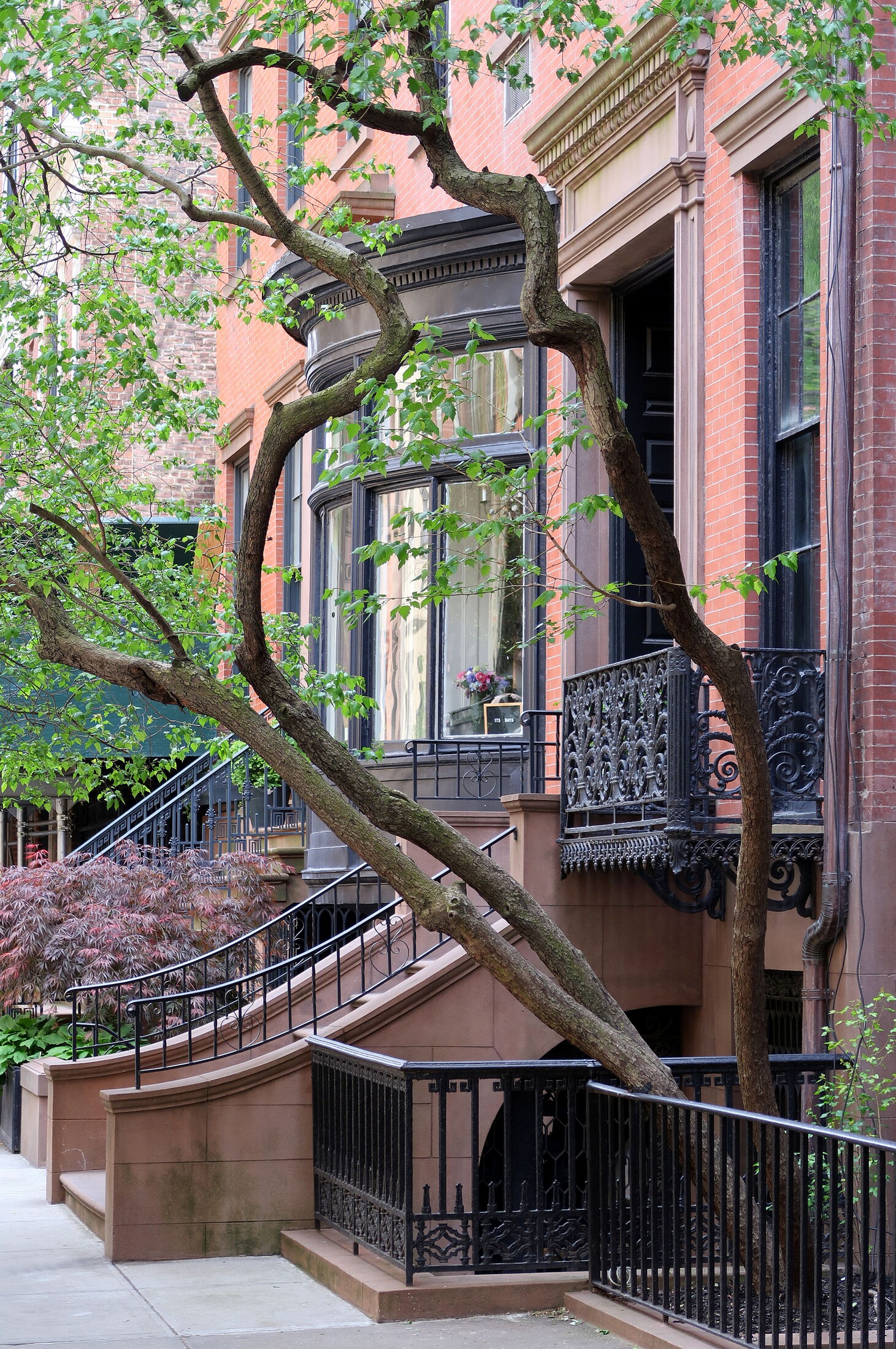
Chelsea's housing is a wide mix. The side streets of the historic district hold Greek Revival and Italianate rowhouses, some single family and many divided. Large prewar complexes such as London Terrace offer co-op and rental apartments, and postwar co-ops and rentals line the avenues. West Chelsea, near the High Line, has loft conversions and new condominiums by well known architects, including Zaha Hadid's 520 West 28th Street.
Streets, parks and landmarks
The High Line, an elevated park on a former freight line, threads through West Chelsea past galleries and new architecture. The Chelsea Historic District preserves tree lined rows around the seminary, including Cushman Row on West 20th Street. The Hotel Chelsea on West 23rd Street and Chelsea Market, in the former Nabisco factory, are landmarks of the area, and Hudson River Park and Chelsea Piers line the waterfront.
Selling in Chelsea
Pricing in Chelsea depends heavily on building type. For townhouses on the historic side streets, width, condition and garden matter most. For prewar co-ops, light, layout and building finances drive interest. In West Chelsea, High Line or river views, outdoor space and architectural pedigree carry a premium. I would position a sale by identifying which of these markets a property competes in and highlighting the features buyers in that segment value.
Compass market data: Compass counts Chelsea in its Downtown submarket. In Q3 2026 the Downtown submarket’s median sale price was $1,792,500 (+21.5% on a year earlier), on 890 closed sales (+9.9%). Source: Compass Manhattan Market Report Q3 2026 (data: REBNY RLS, ACRIS). NYC market data →
Get Gavin’s report for your building: recent sales in your line and nearby, and what they mean for your price. Free, no obligation.
Buying in Chelsea
Check whether the building is inside the Chelsea or West Chelsea historic districts, since exterior work there requires Landmarks approval. Near the High Line, ask about view corridors and planned development, as West Chelsea's special zoning has allowed new towers. Co-op complexes have their own board and financial requirements, and new condominiums may carry tax abatements.
Chelsea: frequently asked questions
Is Chelsea a good place to buy an apartment?
It depends on the type of home you want. Chelsea has a broad mix of housing: rowhouses in the historic district, large prewar co-op and rental complexes, postwar buildings on the avenues and new architect designed condominiums near the High Line. Transit is extensive, with the 1, A, C, E, F, M, L and PATH nearby. Comparing building types carefully helps clarify value.
What are typical buildings in Chelsea?
The historic core has Greek Revival and Italianate rowhouses from the mid nineteenth century, many now divided into apartments. Large prewar complexes such as London Terrace hold hundreds of apartments, and postwar co-ops and rentals line the avenues. West Chelsea adds converted warehouses and new condominiums by architects including Zaha Hadid, many with views of the High Line.
Which subway lines serve Chelsea?
The 1 train runs along Seventh Avenue with stops at 18th, 23rd and 28th Streets. The C and E stop at 23rd Street on Eighth Avenue, and the A, C, E and L meet at 14th Street. The F and M run along Sixth Avenue with PATH service, and the 7 train's 34th Street-Hudson Yards station sits at the northern edge. West Chelsea is farther from the subway.
Is Chelsea a historic district?
Parts of it are. The Chelsea Historic District was designated in 1970 and extended in 1981, covering rowhouse blocks around the General Theological Seminary. The West Chelsea Historic District, designated in 2008, protects former industrial buildings near the High Line, and the small Lamartine Place Historic District followed in 2009. Much of the rest of Chelsea is not landmarked.
Sources: thehighline.org, mta.info, nyc.gov. Neighborhood boundaries are customary and vary by source. Updated October 2026.
More in Downtown Manhattan