Manhattan · Downtown Manhattan
Greenwich Village real estate guide
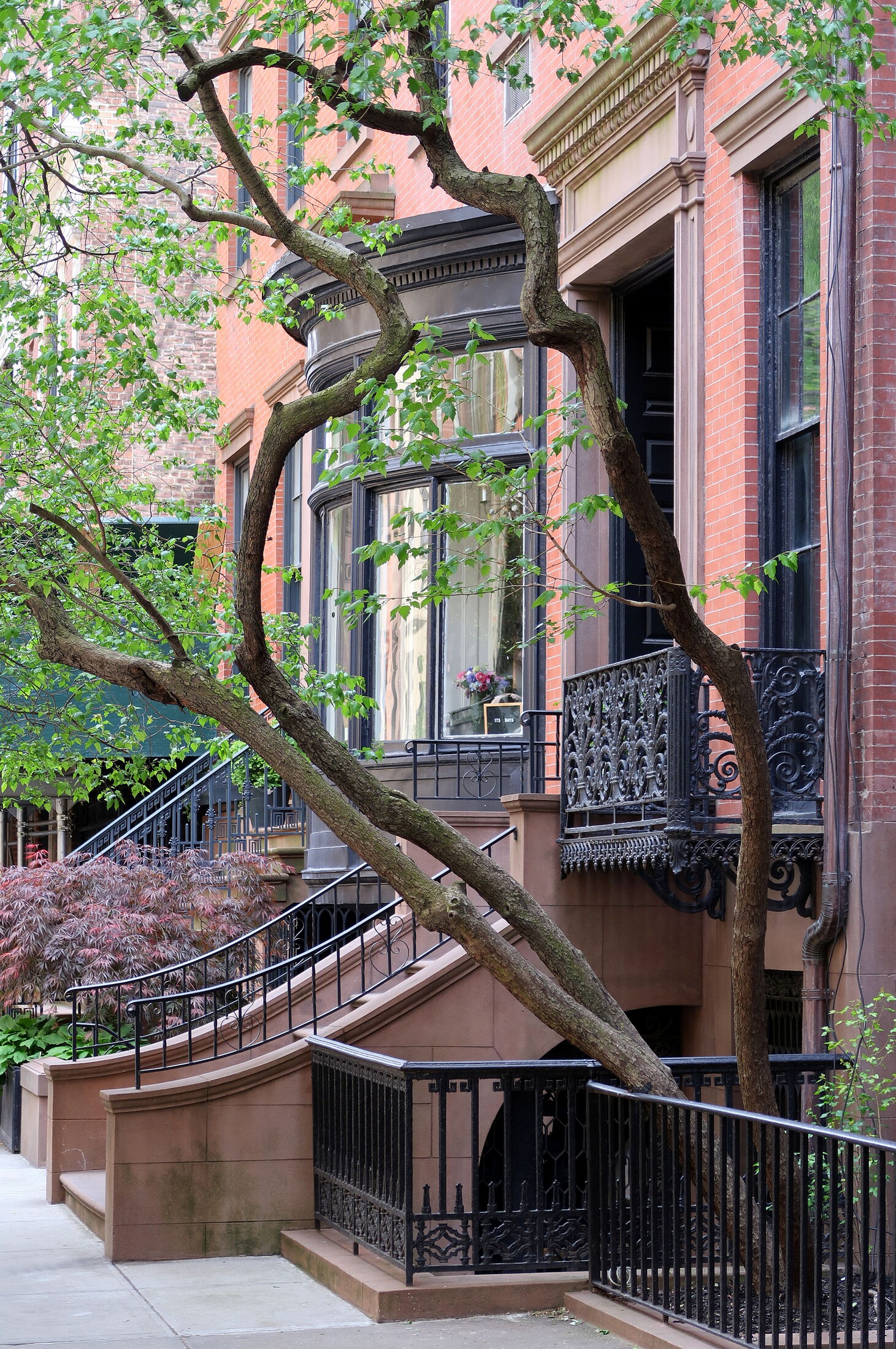
Greenwich Village is the Lower Manhattan neighborhood between 14th Street and Houston Street, extending roughly from Broadway west toward the Hudson River, with Washington Square Park at its center. It began as a separate village north of the colonial city, which is why many of its streets predate the 1811 grid and meet at unexpected angles. In the nineteenth century it filled with Federal and Greek Revival rowhouses, later joined by tenements, loft buildings and grand prewar apartment houses along Fifth Avenue and around the square. The Greenwich Village Historic District, designated in 1969, was one of the city's first large districts, and it was extended in 2006 and 2010. The South Village Historic District followed in 2013 and the Sullivan-Thompson Historic District in 2016. The western portion of the neighborhood is often called the West Village.
Homes and buildings in Greenwich Village
Greenwich Village offers nearly every Manhattan housing type: Federal and Greek Revival townhouses, brownstones, prewar doorman co-ops along Fifth Avenue and lower University Place, walk-up tenements in the South Village, loft conversions near Broadway and a modest number of newer condominiums. Co-ops make up a large share of apartments, and single family townhouses are among the most sought after properties downtown. Landmark protections limit new development across much of the area.
Streets, parks and landmarks
Washington Square Park, with its marble arch completed in 1892, anchors the neighborhood, and streets like Washington Mews, MacDougal Alley and the rows of Washington Square North preserve early nineteenth century houses. Fifth Avenue begins at the arch. Jefferson Market Library, a Victorian Gothic courthouse turned library, stands on Sixth Avenue. Small theaters, jazz clubs and historic churches are woven into blocks of brick rowhouses and tree lined side streets.
Selling in Greenwich Village
In the Village, the specific block and building carry great weight. For townhouses, width, condition, original detail, garden depth and whether the house is single family or divided drive value. For co-op apartments, light, layout, prewar detail and building finances matter most. I would position a sale around what makes the property hard to replace, prepare landmark and building documentation in advance, and price carefully against a thin set of true comparables.
Compass market data: Compass counts Greenwich Village in its Downtown submarket. In Q3 2026 the Downtown submarket’s median sale price was $1,792,500 (+21.5% on a year earlier), on 890 closed sales (+9.9%). Source: Compass Manhattan Market Report Q3 2026 (data: REBNY RLS, ACRIS). NYC market data →
Get Gavin’s report for your building: recent sales in your line and nearby, and what they mean for your price. Free, no obligation.
Buying in Greenwich Village
Most of the neighborhood lies within historic districts, so exterior changes, rooftop additions and some window replacements require Landmarks Preservation Commission approval. For townhouses, budget for inspection of the facade, roof and mechanical systems. Co-ops vary widely in financial requirements and sublet policies, so review them early. Also check whether nearby university or institutional buildings could change views.
Greenwich Village: frequently asked questions
Is Greenwich Village a good place to buy an apartment?
That depends on what you want. Greenwich Village has an unusually broad range of homes, from nineteenth century townhouses to prewar doorman co-ops and loft conversions, and much of it is protected by historic districts, which limits new construction. Washington Square Park and many subway lines are central to the area. Because co-ops dominate, building finances and board policies deserve close review.
What are typical buildings in Greenwich Village?
Common types include Federal and Greek Revival rowhouses from the early to mid nineteenth century, brownstones, walk-up tenements in the South Village, and elegant prewar apartment buildings along Fifth Avenue and around Washington Square. Loft conversions appear closer to Broadway, and a limited number of newer condominiums have been built where zoning and landmark rules allow.
Which subway lines serve Greenwich Village?
The main hub is West 4th Street-Washington Square, served by the A, B, C, D, E, F and M trains. The 1 stops at Christopher Street and Houston Street, and the R and W stop at 8th Street-NYU. PATH trains to New Jersey stop at 9th Street and Christopher Street, and 14th Street stations line the northern edge.
Is Greenwich Village a historic district?
Much of it is. The Greenwich Village Historic District was designated in 1969 and extended in 2006 and 2010. The South Village Historic District was designated in 2013 and the Sullivan-Thompson Historic District in 2016, and smaller districts like MacDougal-Sullivan Gardens date to 1967. Exterior work within these districts requires Landmarks Preservation Commission approval.
Sources: s-media.nyc.gov, nycgovparks.org, mta.info. Neighborhood boundaries are customary and vary by source. Updated October 2026.
More in Downtown Manhattan