Manhattan · Downtown Manhattan
Nolita real estate guide
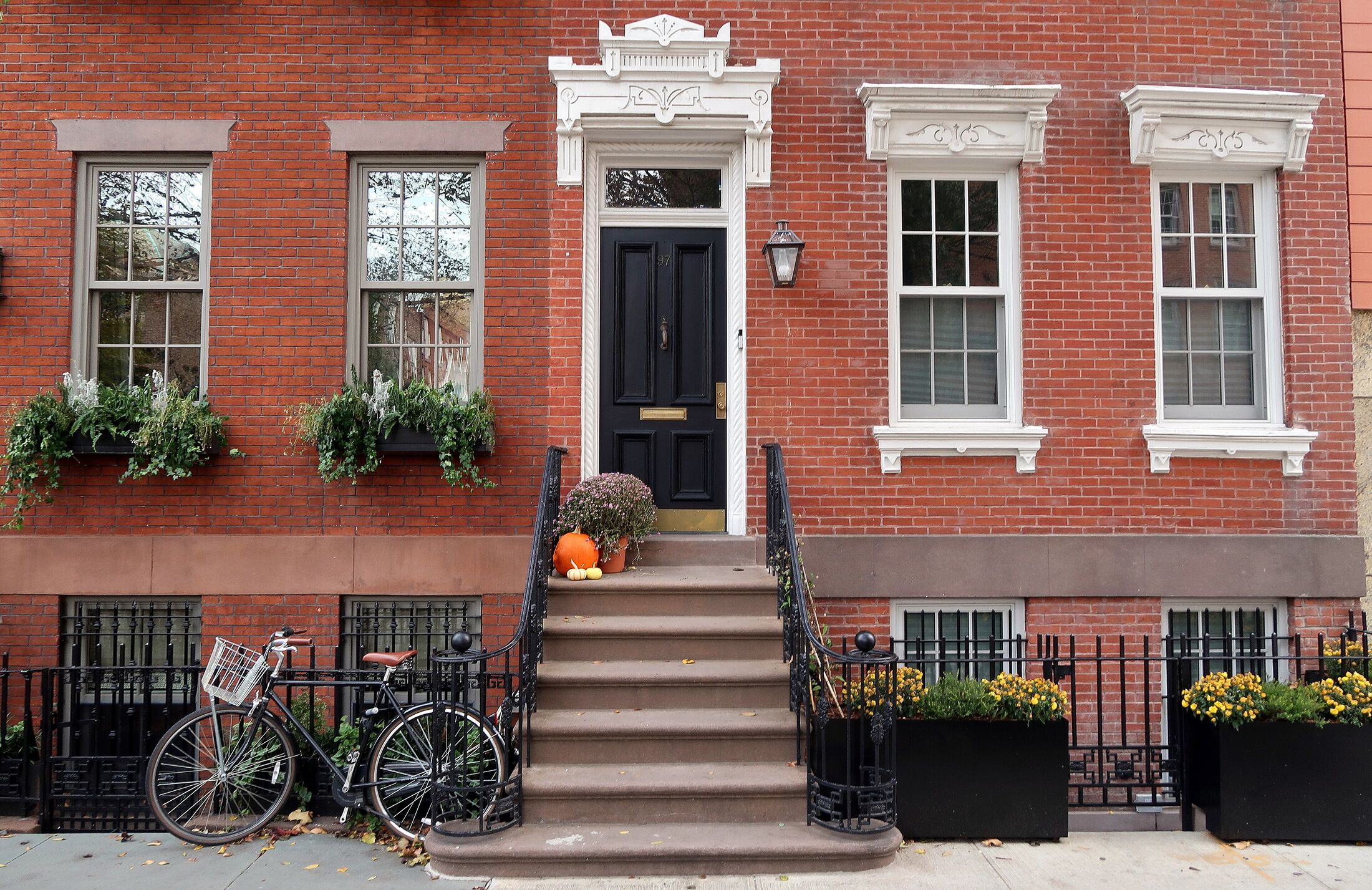
Nolita is a small Lower Manhattan neighborhood bounded roughly by Houston Street to the north, the Bowery to the east, Broome Street to the south and Lafayette Street to the west. The name, short for North of Little Italy, came into use in the mid 1990s, and for most of its history the area was considered part of Little Italy. Its streets, Mott, Mulberry and Elizabeth among them, are lined with five and six story tenements built in the late nineteenth and early twentieth centuries, many with fire escapes and storefronts at street level. Old St. Patrick's Cathedral, the city's first Catholic cathedral, and the ornate 1885 Puck Building are its best known landmarks. Unlike SoHo and NoHo, Nolita is not covered by a large historic district, so individual landmarks and zoning shape what gets built.
Homes and buildings in Nolita
Most apartments are in walk-up tenement buildings, typically five or six stories, organized as rentals, co-ops and some condominiums. Units tend to be smaller and laid out railroad style or in compact floor plans. There is a modest amount of newer boutique condominium development and some converted commercial buildings. Elevator buildings are relatively uncommon, so they and units with private outdoor space are notably scarce.
Streets, parks and landmarks
Nolita is a neighborhood of narrow streets and low buildings, with small shops and cafes occupying the ground floors along Mott, Mulberry and Elizabeth Streets. The brick wall surrounding Old St. Patrick's Cathedral and its churchyard defines several blocks. Petrosino Square sits at the southwest corner, and the Elizabeth Street Garden, a sculpture garden on city owned land, has been the subject of a long running public debate over its future.
Selling in Nolita
In Nolita, supply is tight and most buildings are walk-ups, so anything that sets a unit apart carries weight: an elevator, a renovated layout, light from a corner or rear exposure, and especially a terrace or roof access. Floor level matters in walk-ups, and I would be candid about stairs while highlighting what the unit offers. I would focus marketing on condition and character, and price relative to truly comparable walk-up or elevator stock.
Compass market data: Compass counts Nolita in its Downtown submarket. In Q3 2026 the Downtown submarket’s median sale price was $1,792,500 (+21.5% on a year earlier), on 890 closed sales (+9.9%). Source: Compass Manhattan Market Report Q3 2026 (data: REBNY RLS, ACRIS). NYC market data →
Get Gavin’s report for your building: recent sales in your line and nearby, and what they mean for your price. Free, no obligation.
Buying in Nolita
Expect walk-up buildings and smaller floor plans, and weigh floor level against light and price. For co-ops, review the building's finances, underlying mortgage and any planned facade or structural work, which is common in older tenements. Ask about window exposures and whether nearby lots could be developed, since the neighborhood lacks broad landmark protection.
Nolita: frequently asked questions
Is Nolita a good place to buy an apartment?
That depends on what you need. Nolita has a small, tightly held housing stock, mostly in walk-up tenement buildings with compact layouts, plus a few elevator condominiums. Buyers who want character, central location and access to several subway lines often look here, while those who need an elevator or larger floor plans may find fewer options. Comparing building finances and condition is important.
What are typical buildings in Nolita?
The typical Nolita building is a five or six story brick tenement from the late nineteenth or early twentieth century, with shops at street level and walk-up apartments above. Some have been combined or renovated into larger units. There are also a few converted commercial buildings, newer boutique condominiums, and landmarks such as the Puck Building and Old St. Patrick's Cathedral.
Which subway lines serve Nolita?
Several stations ring the neighborhood. The 6 stops at Spring Street on Lafayette, and the B, D, F and M stop at Broadway-Lafayette on Houston Street. The R and W stop at Prince Street a block west, and the J and Z stop at Bowery on the eastern edge. Canal Street stations a few blocks south add more lines.
Is Nolita a historic district?
Not as a whole. Unlike neighboring SoHo and NoHo, Nolita is not covered by a large Landmarks Preservation Commission historic district. Several buildings are individually designated, including Old St. Patrick's Cathedral and the Puck Building. Without district wide protection, zoning rules rather than landmark review govern most changes to buildings.
Sources: nyc.gov, nycgovparks.org, mta.info. Neighborhood boundaries are customary and vary by source. Updated October 2026.
More in Downtown Manhattan