Brooklyn · Neighborhood guide
Greenpoint real estate guide
Greenpoint is Brooklyn's northernmost neighborhood, bordered by Newtown Creek and Queens to the north and east, the East River to the west, and Williamsburg to the south. In the nineteenth century it was one of the busiest industrial centers on the eastern seaboard, home to shipyards, potteries, glassworks, and refineries, and the Union ironclad USS Monitor was built here in 1862. Merchants and shipbuilders built rowhouses on the blocks nearest the river, and in 1982 the Landmarks Preservation Commission designated the Greenpoint Historic District, with 363 buildings erected mostly between 1850 and 1900. The Eberhard Faber Pencil Company Historic District followed in 2007. The 2005 waterfront rezoning opened former industrial land to residential towers, including the large Greenpoint Landing development at the northern end. Manhattan Avenue and Franklin Street are the main commercial streets. The G train stops at Nassau Avenue and Greenpoint Avenue, and NYC Ferry serves a Greenpoint landing.
Homes and buildings in Greenpoint
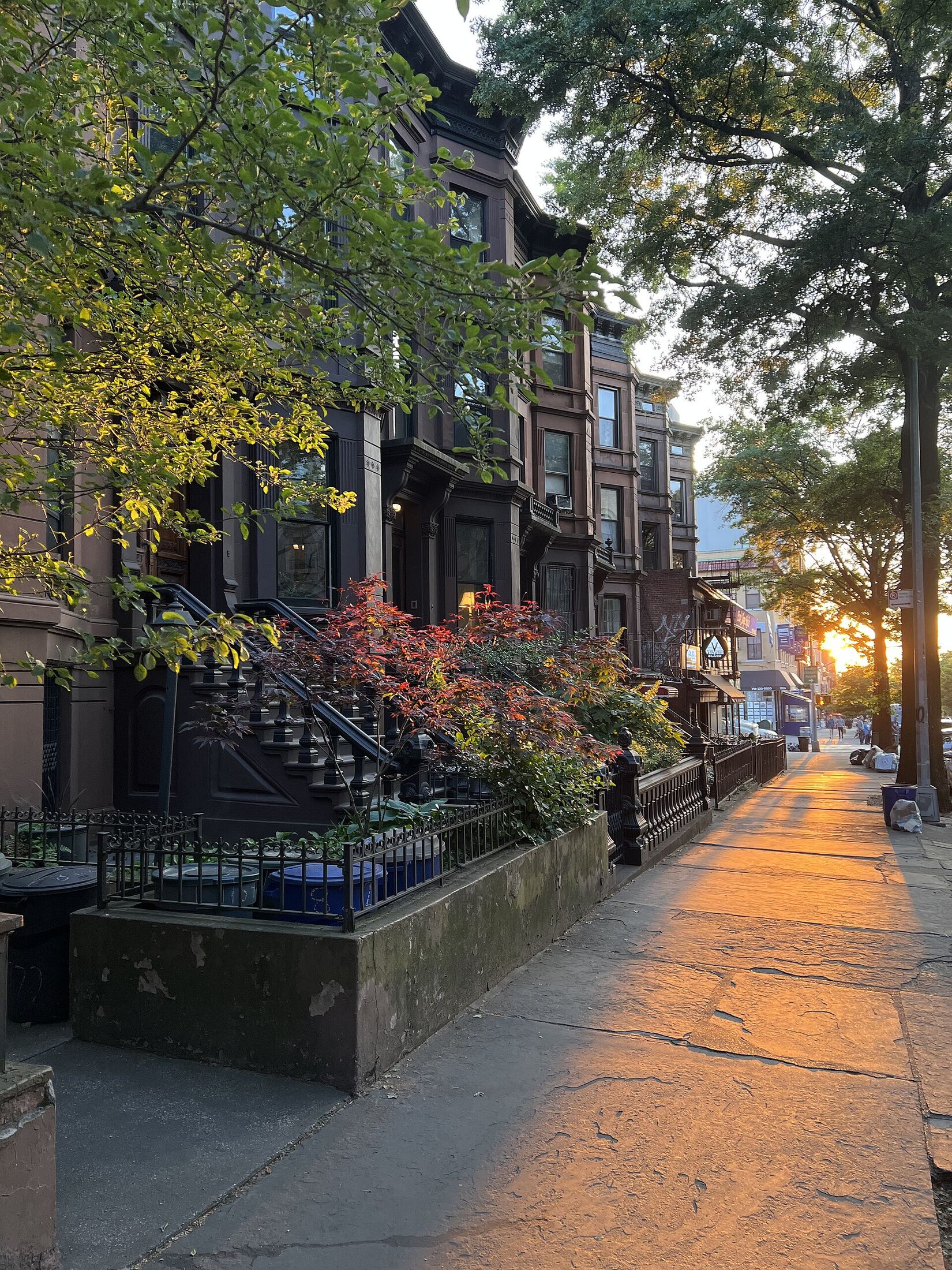
Housing is mixed. The historic core has brick and brownstone rowhouses with Italianate, Second Empire, Neo-Grec, and Queen Anne details. Many other blocks hold two and three family wood-frame houses, often with siding over the original clapboard, plus walk-up apartment buildings. Former factories have been converted to lofts, and the waterfront now carries high-rise condominium and rental towers built after the 2005 rezoning, including Greenpoint Landing.
Streets, parks and landmarks
Streets are lined with modest houses and corner storefronts, and Manhattan Avenue is a long commercial spine of shops and restaurants. Franklin Street, nearer the water, has cafes and boutiques in older buildings. Transmitter Park, opened on a former radio transmitter site, has a pier facing Midtown Manhattan. McGolrick Park has a landmarked shelter pavilion, and McCarren Park sits on the southern edge. Newtown Creek and its wastewater treatment plant's steel digester eggs mark the northern skyline.
Selling in Greenpoint
For houses, buyers look at the ability to live in one unit and rent the others, so a clean multi-family certificate of occupancy and documented rents are key. Restored facades, especially where siding has been removed to reveal original clapboard or cornices, attract attention. Inside the historic district, original details and Landmarks approvals add value. For condos, views of the Manhattan skyline, outdoor space, and amenities are the main drivers, and tower inventory means pricing must be precise.
Compass market data: Compass counts Greenpoint in its North Brooklyn submarket. In Q3 2026 the North Brooklyn submarket’s median sale price was $1,600,000 (+14.3% on a year earlier), on 313 closed sales (−13.3%). Source: Compass Brooklyn Market Report Q3 2026 (data: REBNY RLS, ACRIS). NYC market data →
Get Gavin’s report for your building: recent sales in your line and nearby, and what they mean for your price. Free, no obligation.
Buying in Greenpoint
Newtown Creek is a federal Superfund site, and parts of Greenpoint have a history of industrial contamination, including a large legacy oil spill, so ask about environmental reports for specific sites. Waterfront parcels may be in flood zones. Subway service is limited to the G train, so check commute times. Confirm whether a house sits in the Greenpoint Historic District before planning exterior work.
Greenpoint: frequently asked questions
What is in the Greenpoint Historic District?
The district, designated by the Landmarks Preservation Commission on September 14, 1982, includes 363 commercial and residential buildings erected mostly between 1850 and 1900. They range from rowhouses built for local business owners to more modest houses and apartments built near the factories. Styles include vernacular Italianate, French Second Empire, Neo-Grec, and Queen Anne, many assembled from standard builders' elements.
What housing is typical in Greenpoint?
The most common type is the two or three family wood-frame or brick house, often bought by owners who live in one unit and rent the others. Rowhouses fill the historic district near the river. Converted factory lofts appear throughout, and the waterfront now has high-rise condominium and rental towers built after the 2005 rezoning, including the Greenpoint Landing development at the northern end.
What transit is available in Greenpoint?
The G train is the only subway line, with stations at Nassau Avenue and Greenpoint Avenue. It connects to Long Island City and Court Square in Queens to the north and to Williamsburg and brownstone Brooklyn to the south. NYC Ferry serves a Greenpoint landing with service to Manhattan, and the L train in Williamsburg is reachable from the southern blocks.
How can a Greenpoint seller stand out?
For multi-family houses, organized income paperwork matters most: a certificate of occupancy that matches the units, current leases, and records of recent upgrades. Restored exteriors with original clapboard, cornices, or ironwork photograph well and set a house apart from sided neighbors. For condos, skyline views, outdoor space, and amenities lead, with clear disclosure of common charges and any tax abatement.
Sources: hdc.org, new.mta.info. Neighborhood boundaries are customary and vary by source. Updated October 2026.
More in Brooklyn