Brooklyn · Neighborhood guide
Brooklyn Heights real estate guide
Brooklyn Heights is the bluff-top neighborhood directly across the East River from Lower Manhattan, bounded roughly by the Brooklyn Bridge approaches, Atlantic Avenue, Court Street, and the waterfront. It grew quickly after steam ferry service to Manhattan began in 1814 and is often described as one of the country's first commuter suburbs. In 1965 the Landmarks Preservation Commission made the Brooklyn Heights Historic District the first historic district in New York City, protecting a dense collection of Federal, Greek Revival, Gothic Revival, Italianate, and later rowhouses, mansions, and churches. The Brooklyn Heights Promenade, a cantilevered esplanade built over the Brooklyn-Queens Expressway, opened in two halves in 1950 and 1951 and looks straight across the harbor. Brooklyn Bridge Park sits just below. Transit is unusually broad: the 2 and 3 at Clark Street, the 4 and 5 at Borough Hall, the R at Court Street, and the A and C at High Street.
Homes and buildings in Brooklyn Heights
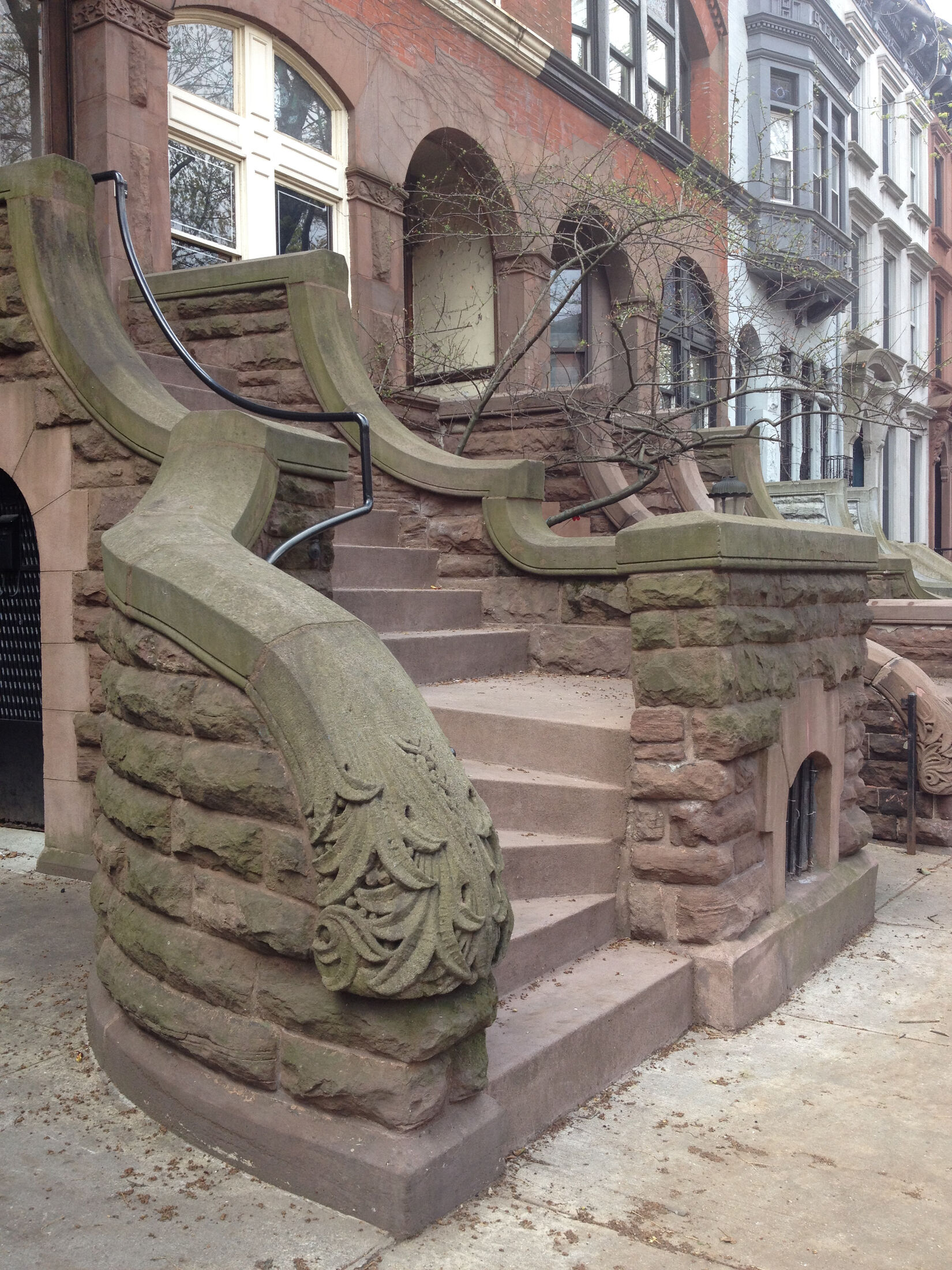
The stock is led by nineteenth-century brick and brownstone rowhouses, including some of the oldest surviving houses in the city from the 1820s, plus carriage houses on mews such as Grace Court Alley and Hunts Lane. Prewar co-op buildings and converted hotels line Montague Street, Clinton Street, and the blocks near Borough Hall. Over the twentieth century many single-family houses were divided into apartments and some have since been reconverted, so floor plans and certificates of occupancy vary widely from house to house.
Streets, parks and landmarks
Streets are narrow and lined with trees, several named for fruit, like Cranberry, Orange, and Pineapple, others for old landowners such as Pierrepont and Remsen. Montague Street is the main commercial street, running from Borough Hall down to the Promenade. Notable buildings include Plymouth Church of the Pilgrims, the Church of St. Ann and the Holy Trinity, and Richard Upjohn's Grace Church. The western edge opens to the harbor, with the Statue of Liberty and the Lower Manhattan skyline in view.
Selling in Brooklyn Heights
Two things move price here more than almost anything: original detail and outlook. Intact Federal or Greek Revival features such as doorways, mantels, plaster cornices, and wide-plank floors deserve careful photography and a description by period. A home with harbor or skyline views near the Promenade trades in a different bracket from one a few blocks inland. Because every exterior change requires Landmarks review, documented approvals, closed permits, and a clean certificate of occupancy are real selling points. For a multi-unit house, have the legal unit count and rent history ready before listing.
Compass market data: Compass counts Brooklyn Heights in its Northwest Brooklyn submarket. In Q3 2026 the Northwest Brooklyn submarket’s median sale price was $1,570,000 (+0.3% on a year earlier), on 755 closed sales (−1.6%). Source: Compass Brooklyn Market Report Q3 2026 (data: REBNY RLS, ACRIS). NYC market data →
Get Gavin’s report for your building: recent sales in your line and nearby, and what they mean for your price. Free, no obligation.
Buying in Brooklyn Heights
Every building in the historic district is subject to Landmarks review for exterior work, including windows, doors, and rooftop additions, so build approval time into renovation plans. Older houses can need structural, waterproofing, or mechanical upgrades. Ask about the city's long-term repair plans for the Brooklyn-Queens Expressway cantilever under the Promenade, since that work may affect the western edge of the neighborhood for years.
Brooklyn Heights: frequently asked questions
Why is Brooklyn Heights called the city's first historic district?
On November 23, 1965, shortly after the city's landmarks law was passed, the Landmarks Preservation Commission designated the Brooklyn Heights Historic District, the first district of its kind in New York City. The designation grew out of local efforts to stop large-scale demolition and redevelopment. It protects hundreds of nineteenth-century rowhouses, churches, and mansions, and any exterior change in the district still requires commission review.
What types of homes are found in Brooklyn Heights?
Mostly brick and brownstone rowhouses built between the 1820s and the late 1800s, in Federal, Greek Revival, Gothic Revival, and Italianate styles. There are also carriage houses on small mews, prewar co-op buildings, and apartments in converted hotels. Many houses have been divided into several units over the years, so a single address might be a townhouse, a two-family house, or a small co-op or condo.
How is Brooklyn Heights served by transit?
Few Brooklyn neighborhoods have more options. The 2 and 3 stop at Clark Street, the 4 and 5 stop at Borough Hall, the R stops at Court Street, and the A and C stop at High Street. NYC Ferry runs from Brooklyn Bridge Park piers below the neighborhood, and the Brooklyn Bridge walkway begins at the northern edge.
What increases the value of a Brooklyn Heights townhouse?
Buyers pay for intact period detail, such as original doorways, mantels, plasterwork, and floors, and for light and outlook, especially harbor or skyline views. Legal clarity also matters: a certificate of occupancy that matches how the house is used, closed permits, and Landmarks approvals for past work make the sale smoother. Garden access and a well-kept parlor floor round out the features that support the strongest pricing.
Sources: new.mta.info. Neighborhood boundaries are customary and vary by source. Updated October 2026.
More in Brooklyn