Brooklyn · Neighborhood guide
Carroll Gardens real estate guide
Carroll Gardens is a brownstone neighborhood south of Cobble Hill, bounded roughly by DeGraw Street, Hoyt Street, Hamilton Avenue, and the Brooklyn-Queens Expressway. It is known for something rare in New York: deep front gardens. In 1846 surveyor Richard Butts laid out lots on several blocks with front yards about 33 feet deep, and the rowhouses built behind them between the late 1860s and the 1880s still sit unusually far back from the sidewalk. The Carroll Gardens Historic District, designated by the Landmarks Preservation Commission in 1973, covers President and Carroll Streets between Smith and Hoyt Streets, where houses were built between 1869 and 1884. Court Street and Smith Street are the main commercial corridors. Carroll Park, a block-sized park between Court and Smith, sits near the center. The F and G trains stop at Carroll Street and at Smith-Ninth Streets.
Homes and buildings in Carroll Gardens
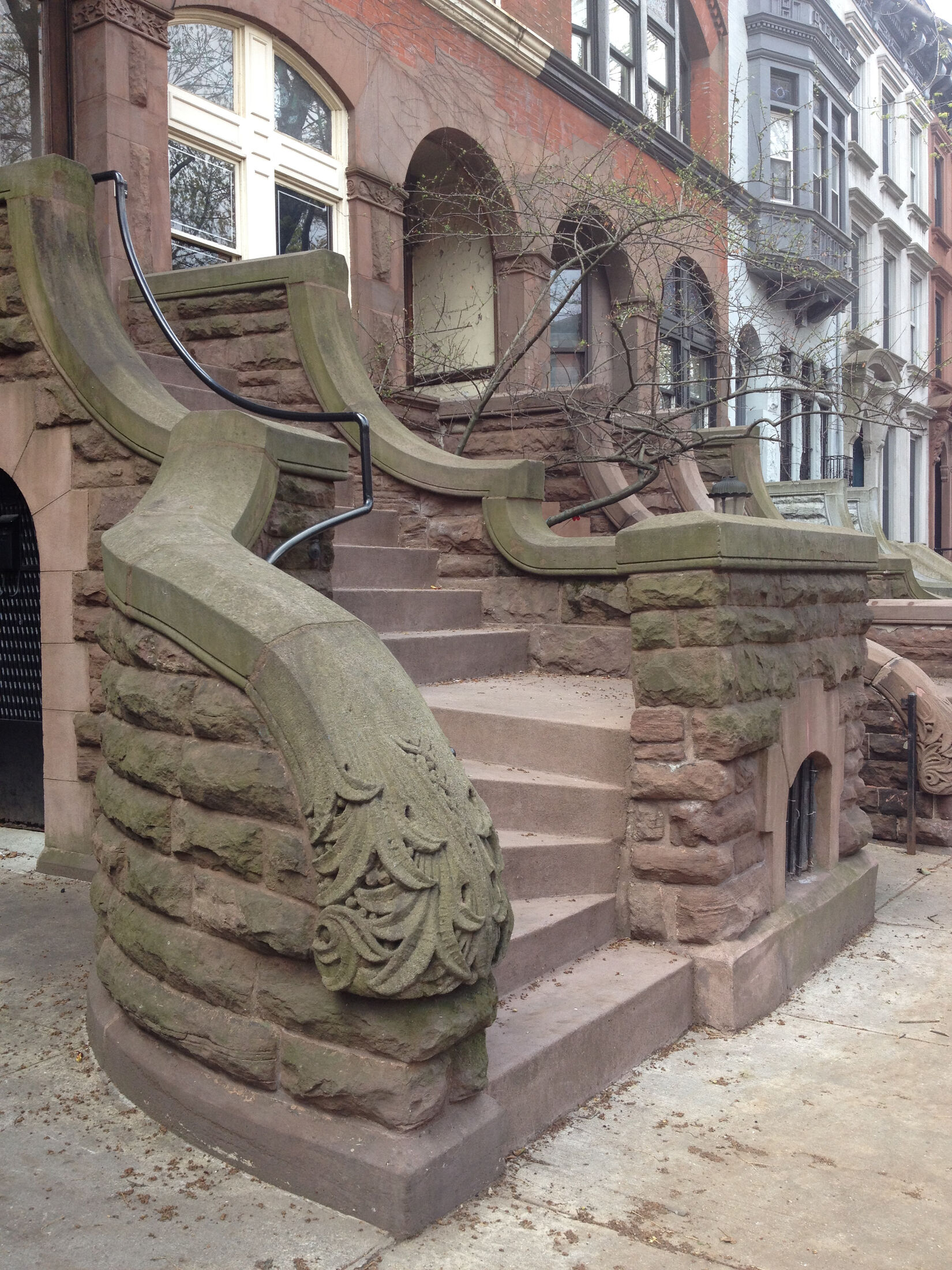
Brownstone and brick rowhouses dominate, typically three and four stories with stoops, many set behind the deep front gardens that give the area its name. Some blocks have smaller frame and brick houses, and there are scattered low-rise apartment buildings and newer condominium buildings, especially toward the Gowanus side and along Fourth Place and the southern blocks. Many houses are two to four family, so buyers can find both full townhouses and condos or co-ops within converted houses.
Streets, parks and landmarks
Tree-lined side streets alternate with the commercial spines of Court Street and Smith Street, which carry bakeries, food shops, restaurants, and services. The front gardens, many fenced with ironwork, give the blocks a deep green setback that photographs well in every season. Carroll Park includes play areas and seating, and churches such as St. Mary Star of the Sea add landmark scale. The Gowanus Canal lies a few blocks east.
Selling in Carroll Gardens
The front garden is the signature asset, so present it well and note its depth. A house that combines that garden with a rear yard, a parlor floor with original woodwork and plaster, and good southern or western light stands out. Inside the historic district, show Landmarks approvals for any exterior work. Outside the district, buyers may ask about development potential nearby, so be ready with zoning basics. Clear documentation of legal units, closed permits, and recent roof and mechanical work shortens due diligence.
Compass market data: Compass counts Carroll Gardens in its Northwest Brooklyn submarket. In Q3 2026 the Northwest Brooklyn submarket’s median sale price was $1,570,000 (+0.3% on a year earlier), on 755 closed sales (−1.6%). Source: Compass Brooklyn Market Report Q3 2026 (data: REBNY RLS, ACRIS). NYC market data →
Get Gavin’s report for your building: recent sales in your line and nearby, and what they mean for your price. Free, no obligation.
Buying in Carroll Gardens
Only part of Carroll Gardens is inside the 1973 historic district, so check each address on the LPC map before planning exterior changes. Blocks near the Gowanus Canal sit in or near the area rezoned in 2021, where new mid-rise and high-rise buildings are permitted. Ask about flood risk on the lower blocks toward the canal and about any front yard drainage issues.
Carroll Gardens: frequently asked questions
Why do Carroll Gardens houses have such deep front yards?
In 1846 surveyor Richard Butts laid out lots on several blocks with front gardens roughly 33 feet deep, much deeper than the Brooklyn norm. The rowhouses built behind them in the decades after the Civil War were set back accordingly. Those gardens remain the neighborhood's defining feature and are one reason the area took the name Carroll Gardens.
Is all of Carroll Gardens landmarked?
No. The Carroll Gardens Historic District, designated on September 25, 1973, covers a small area: President Street and Carroll Street between Smith and Hoyt Streets, with houses built from 1869 to 1884. Much of the rest of the neighborhood is not in a historic district, so exterior rules differ by block. Check the Landmarks Preservation Commission map for any specific address.
What subway lines serve Carroll Gardens?
The F and G trains run along Smith Street with stations at Carroll Street and at Smith-Ninth Streets, the latter on an elevated structure high above the Gowanus Canal. The Bergen Street station on the same lines sits at the northern edge. Buses run on Court Street, and the R train along Fourth Avenue is a walk east across the canal.
What makes a Carroll Gardens house sell for a premium?
A deep, well-kept front garden combined with a usable rear yard is the standout feature. Buyers also look for an intact parlor floor, original woodwork and plaster, and a layout that works as a single-family home or a clean two-family. Strong light, a recent roof, updated systems, and complete permit history all support pricing at the top of the range.
Sources: new.mta.info. Neighborhood boundaries are customary and vary by source. Updated October 2026.
More in Brooklyn