Brooklyn · Neighborhood guide
Cobble Hill real estate guide
Cobble Hill is a compact rowhouse neighborhood in brownstone Brooklyn, bounded by Atlantic Avenue to the north, Court Street to the east, DeGraw Street to the south, and the Brooklyn-Queens Expressway to the west. Its name recalls a Revolutionary War-era hill and fort near today's Court Street and Atlantic Avenue that was later leveled. The Landmarks Preservation Commission designated the Cobble Hill Historic District in 1969 and extended it in 1988, so most of the neighborhood's blocks are protected. Houses date largely from the 1840s through the 1880s, in Greek Revival, Italianate, and Anglo-Italianate styles. On Hicks Street, Alfred Tredway White's Home Buildings and Tower Buildings, completed in the late 1870s, were early model tenements with open stairways and shared courtyards. Small Cobble Hill Park sits at the center on Clinton Street. The F and G stop at Bergen Street, and the Borough Hall transit hub is a short walk north.
Homes and buildings in Cobble Hill
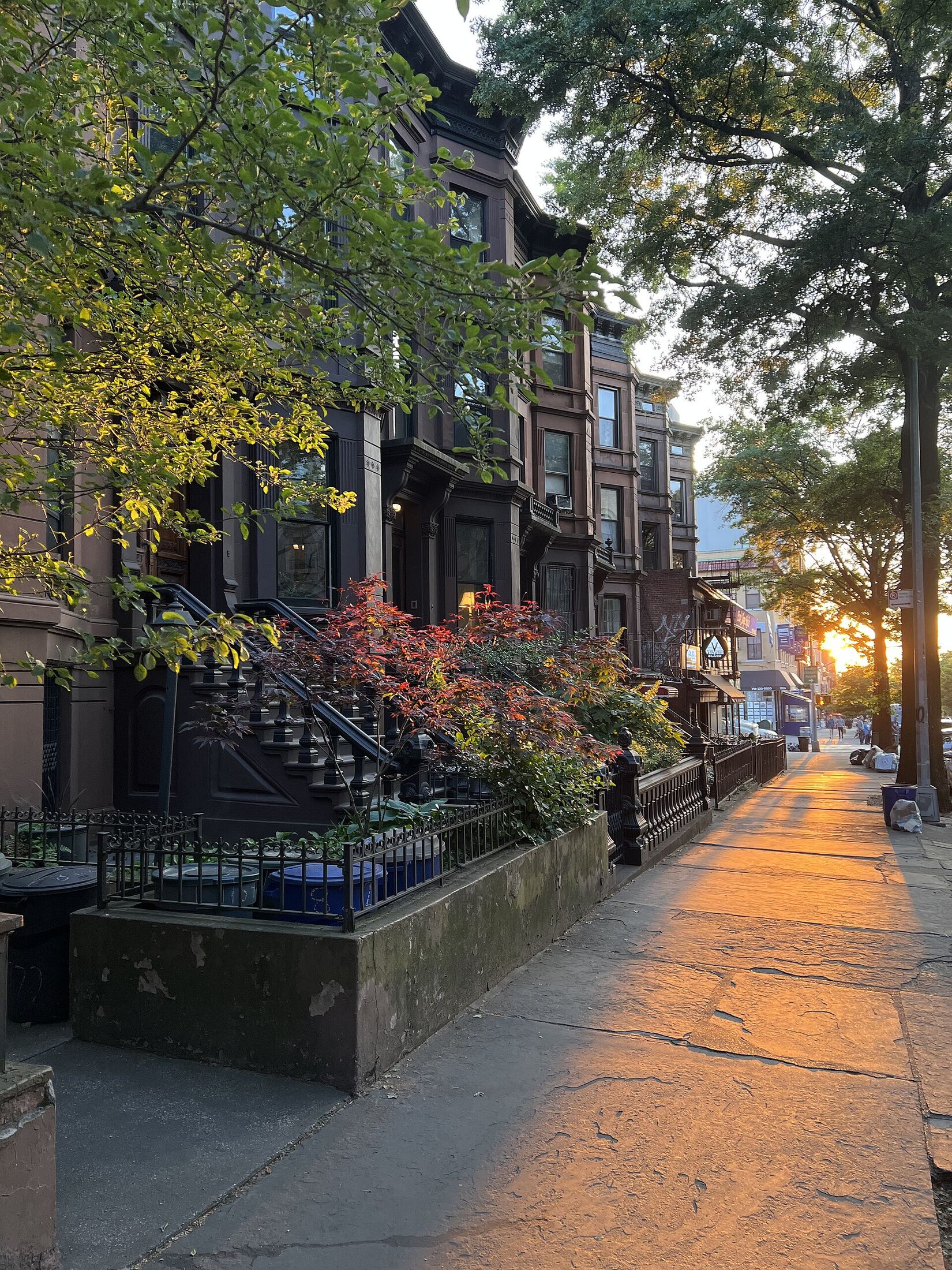
The core is brick and brownstone rowhouses of three and four stories, many still single-family and many divided into two to four units. Carriage houses line Verandah Place, and Warren Place is a mews of small cottages built for working families in the 1870s. Larger buildings include the White model housing on Hicks Street and the redeveloped former Long Island College Hospital campus, which now holds new condominium and rental buildings. Co-ops and condos in converted houses offer a smaller entry point.
Streets, parks and landmarks
The street grid is short and regular, with tree canopy over most blocks. Court Street and Smith Street on the eastern side carry shops, cafes, and restaurants, and Atlantic Avenue to the north has a long stretch of storefronts. Churches, including Christ Church on Clinton Street designed by Richard Upjohn, punctuate the blocks. Cobble Hill Park is a small landscaped square with benches and a play area, and the Brooklyn Bridge Park piers are a short walk west.
Selling in Cobble Hill
Cobble Hill buyers are usually shopping for a particular house type, so the specifics of yours matter. A parlor floor with original plaster, mantels, and tall windows, plus direct access to a rear garden, supports the strongest pricing. Single-family layouts and houses that can easily convert back draw a wide pool. Inside the historic district, show that past exterior work was approved and permits are closed. For a multi-unit house, have the certificate of occupancy and any rent-regulated status documented up front, since buyers price those details in.
Compass market data: Compass counts Cobble Hill in its Northwest Brooklyn submarket. In Q3 2026 the Northwest Brooklyn submarket’s median sale price was $1,570,000 (+0.3% on a year earlier), on 755 closed sales (−1.6%). Source: Compass Brooklyn Market Report Q3 2026 (data: REBNY RLS, ACRIS). NYC market data →
Get Gavin’s report for your building: recent sales in your line and nearby, and what they mean for your price. Free, no obligation.
Buying in Cobble Hill
Most blocks fall inside the historic district, so exterior changes such as windows, stoops, and rear additions need Landmarks Preservation Commission review. Houses on the western edge sit near the Brooklyn-Queens Expressway, so check noise at different hours. Older rowhouses may need updates to wiring, plumbing, and roofs, and a structural engineer's look at the rear wall and foundation is a sensible step.
Cobble Hill: frequently asked questions
Is Cobble Hill in a historic district?
Yes, for the most part. The Landmarks Preservation Commission designated the Cobble Hill Historic District on December 20, 1969, and extended it on June 7, 1988. Within the district, changes to facades, windows, stoops, and rear or rooftop additions require commission review. For sellers, that protection keeps the streetscape intact, and for buyers it means renovation plans should include time for approvals.
What housing will I find in Cobble Hill?
Mostly three and four story brick and brownstone rowhouses from the 1840s to the 1880s, along with carriage houses on Verandah Place and small cottages on Warren Place. There are also model tenements from the 1870s on Hicks Street, condo and co-op apartments in converted houses, and new residential buildings on the former Long Island College Hospital campus near the waterfront.
What transit is near Cobble Hill?
The F and G trains stop at Bergen Street on the neighborhood's eastern side. A walk north reaches Borough Hall and Court Street, where the 2, 3, 4, 5, and R trains run. Several bus routes use Court Street and Atlantic Avenue, and NYC Ferry stops at Pier 6 in Brooklyn Bridge Park at the foot of Atlantic Avenue.
What do Cobble Hill buyers pay most for?
A well-preserved parlor floor, original interior detail, and private garden access lead the list, along with a layout that works as a single-family home or converts easily to one. Light matters too, so south-facing gardens and deep rear yards stand out. Paperwork rounds it out: Landmarks approvals for past work, closed permits, and a certificate of occupancy that matches the current use all reduce friction in contract.
Sources: nycgovparks.org, new.mta.info. Neighborhood boundaries are customary and vary by source. Updated October 2026.
More in Brooklyn