Brooklyn · Neighborhood guide
Bedford-Stuyvesant real estate guide
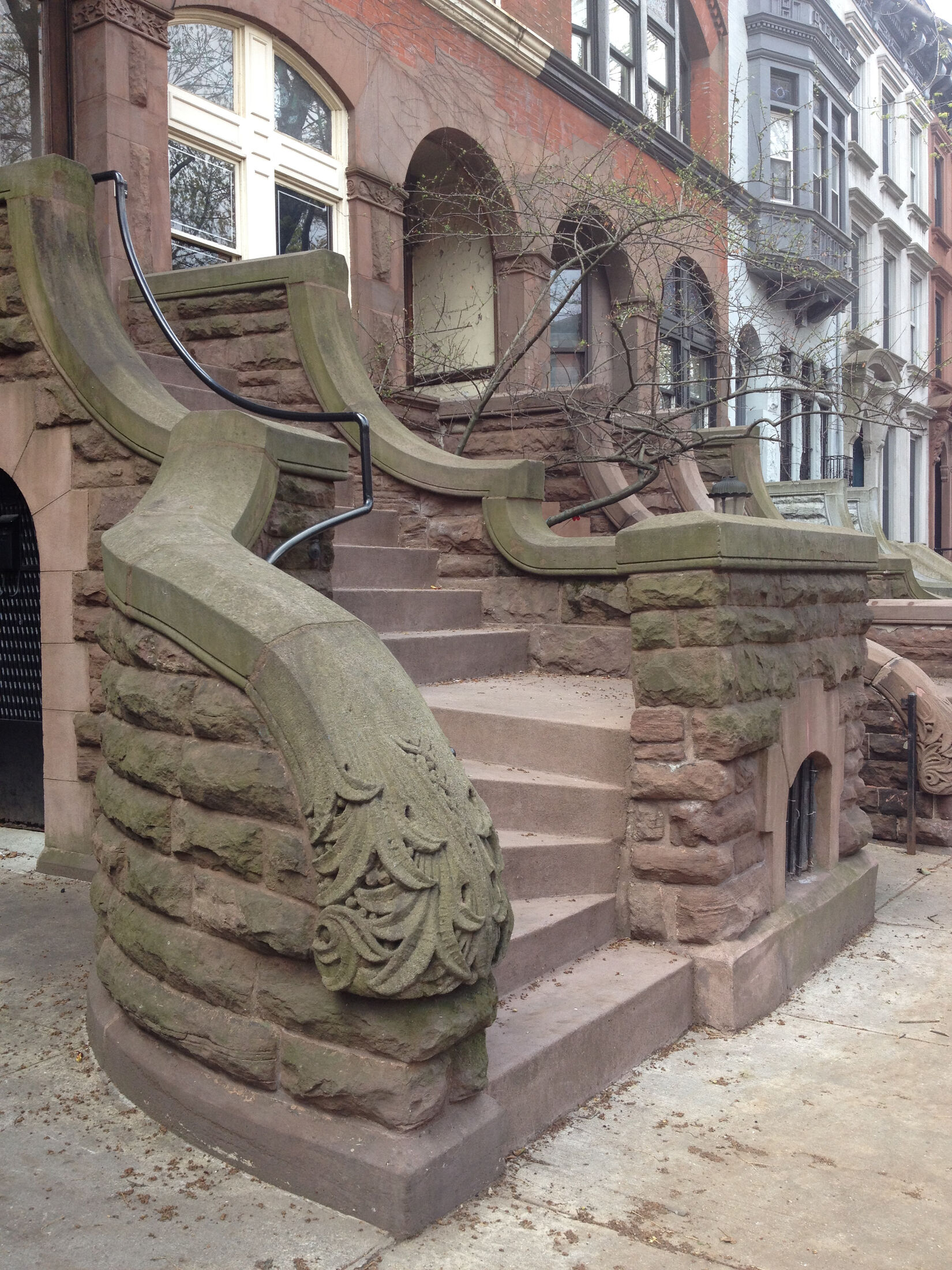
Bedford-Stuyvesant is a large neighborhood in central Brooklyn, bounded roughly by Flushing Avenue, Broadway, Atlantic Avenue, and Classon Avenue. It holds one of the largest collections of intact nineteenth-century rowhouses in the country, most built between the 1870s and the early 1900s in brownstone, brick, and limestone. The Landmarks Preservation Commission designated the Stuyvesant Heights Historic District in 1971 and more than doubled it in 2013 as the Bedford-Stuyvesant/Expanded Stuyvesant Heights Historic District, with about 825 buildings. The Bedford Historic District, with 824 buildings, followed in 2015, and smaller districts include Alice and Agate Courts from 2009 and Willoughby-Hart from 2024. Styles include Italianate, Neo-Grec, Romanesque Revival, Queen Anne, and Renaissance Revival. Herbert Von King Park and Fulton Park provide green space. The A and C run along Fulton Street, the G along Lafayette Avenue, and the J, M, and Z along Broadway.
Homes and buildings in Bedford-Stuyvesant
Rowhouses dominate: two and three story brownstones, brick Neo-Grec houses, and turn-of-the-century limestones, many with intact stoops, cornices, and interior woodwork. Many are two to four family. Larger freestanding houses and mansions appear on streets such as Jefferson Avenue and Hancock Street. Prewar apartment buildings line some avenues, and newer small condominium buildings have been built on vacant lots and along commercial corridors, adding apartments with modern layouts.
Streets, parks and landmarks
Long, unbroken rows of houses with matching cornices and stoops define the side streets, under mature trees. Fulton Street, Nostrand Avenue, Tompkins Avenue, and Lewis Avenue carry shops, cafes, and restaurants. Herbert Von King Park, among Brooklyn's older parks, has lawns, an amphitheater, and a cultural center. Landmark buildings such as the former Boys' High School on Marcy Avenue add Romanesque Revival scale.
Selling in Bedford-Stuyvesant
Bed-Stuy buyers shop by detail. Original woodwork, pier mirrors, pocket doors, mantels, and plaster ceilings are often intact, and showcasing them supports pricing. A strong parlor floor, garden access, and layouts that allow an owner's duplex with a rental unit broaden demand. If the house is in one of the historic districts, Landmarks approvals and closed permits are valuable. Clean title and a matching certificate of occupancy matter especially here, as older transfers sometimes left loose ends.
Compass market data: Compass counts Bedford-Stuyvesant in its East Brooklyn submarket. In Q3 2026 the East Brooklyn submarket’s median sale price was $1,120,000 (+12.1% on a year earlier), on 427 closed sales (−0.7%). Source: Compass Brooklyn Market Report Q3 2026 (data: REBNY RLS, ACRIS). NYC market data →
Get Gavin’s report for your building: recent sales in your line and nearby, and what they mean for your price. Free, no obligation.
Buying in Bedford-Stuyvesant
Historic district boundaries are patchwork, so confirm status for each address on the LPC map. Many houses have original systems that need updating, and some have deferred masonry or roof work. Check for any open permits, violations, or liens, and confirm the legal unit count. Commute options vary by block between the A and C, G, and J, M, and Z lines.
Bedford-Stuyvesant: frequently asked questions
Which parts of Bedford-Stuyvesant are landmarked?
Several districts. Stuyvesant Heights was designated in 1971 and expanded in 2013 to about 825 buildings. The Bedford Historic District, with 824 buildings between roughly Monroe and Macon Streets and Bedford and Tompkins Avenues, was designated in December 2015. Smaller districts include Alice and Agate Courts from 2009 and Willoughby-Hart, designated in June 2024. Many blocks remain outside any district.
What housing styles are common in Bed-Stuy?
Mostly rowhouses from the 1870s to the early 1900s in Italianate, Neo-Grec, Romanesque Revival, Queen Anne, and Renaissance Revival styles, built of brownstone, brick, and limestone. Many retain original stoops, cornices, and rich interior woodwork. There are also freestanding mansions on some blocks, prewar apartment buildings along the avenues, and newer small condominium buildings on former lots.
What subway lines serve Bedford-Stuyvesant?
The A and C run under Fulton Street with stations including Nostrand Avenue, Kingston-Throop Avenues, and Utica Avenue, where the A runs express. The G runs along Lafayette Avenue and up through the western edge. The J, M, and Z run on the elevated line above Broadway along the northern boundary. The Long Island Rail Road stops at Nostrand Avenue.
What helps a Bed-Stuy brownstone sell?
Intact interior detail is the biggest lever: original woodwork, pier mirrors, mantels, and plaster work, presented in good light. A well-preserved parlor floor, private garden, and a layout that supports an owner's duplex plus rental widen the pool. Clean paperwork matters too, including clear title, a certificate of occupancy that matches the unit count, and no open permits or violations.
Sources: nyc.gov, new.mta.info. Neighborhood boundaries are customary and vary by source. Updated October 2026.
More in Brooklyn