Brooklyn · Neighborhood guide
Fort Greene real estate guide
Fort Greene is a brownstone neighborhood just east of Downtown Brooklyn, bounded roughly by Flushing Avenue, Flatbush Avenue Extension, Atlantic Avenue, and Vanderbilt Avenue. It takes its name from a Revolutionary War earthwork, first called Fort Putnam and later renamed for General Nathanael Greene, that stood on the hill now occupied by Fort Greene Park. The park, laid out by Frederick Law Olmsted and Calvert Vaux in the 1860s, is topped by the Prison Ship Martyrs' Monument, a column by McKim, Mead & White dedicated in 1908. Most of the surrounding rowhouses were built from the 1850s to the 1880s, and in 1978 the Landmarks Preservation Commission designated both the Fort Greene Historic District and the adjacent Brooklyn Academy of Music Historic District. The Williamsburgh Savings Bank Tower, completed in 1929, rises at the southern edge. The C, G, and the many lines at Atlantic Avenue-Barclays Center serve the area.
Homes and buildings in Fort Greene
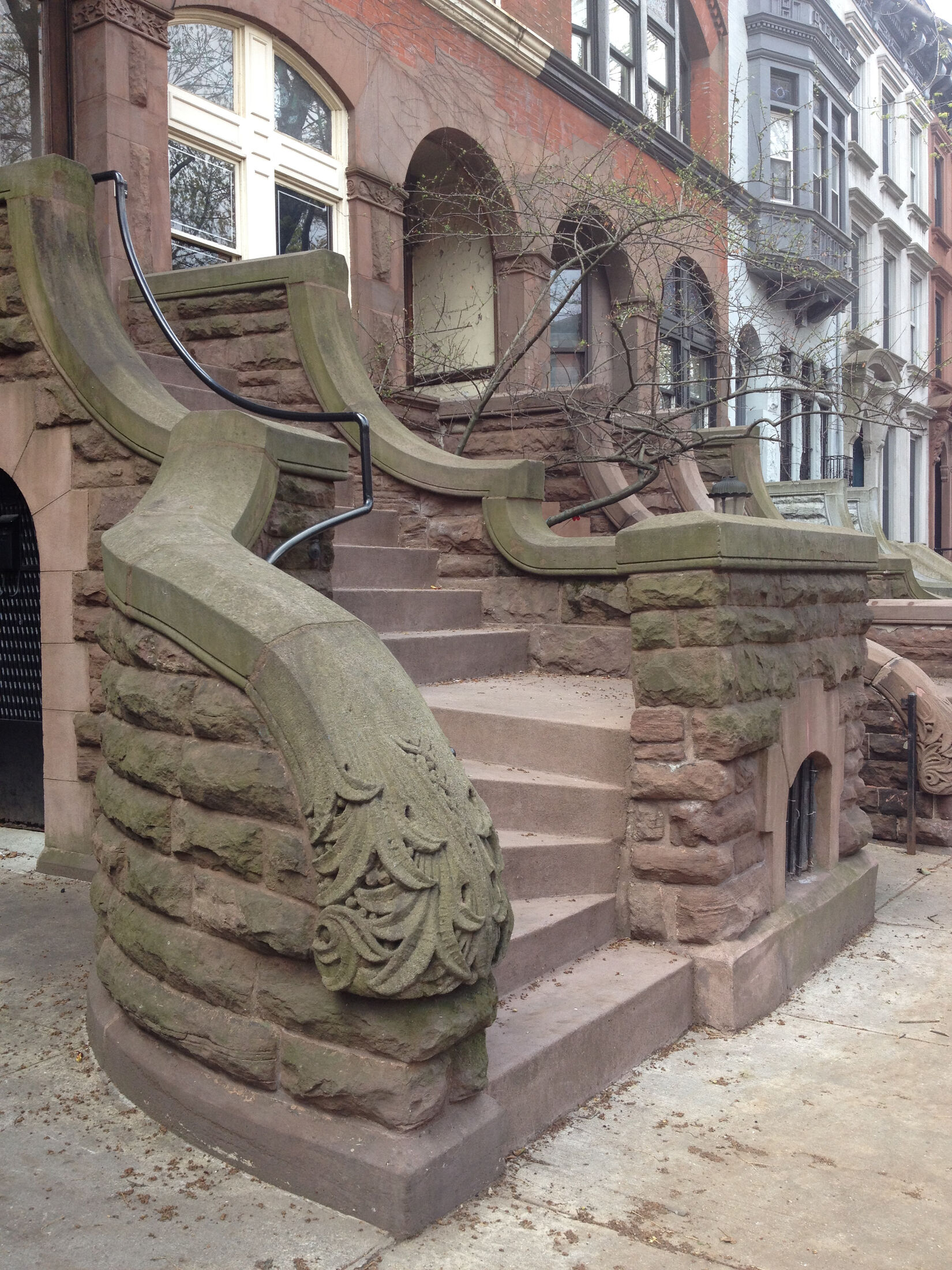
Italianate and Neo-Grec brownstone and brick rowhouses dominate, many on wide streets such as South Oxford, South Portland, and Washington Park facing the park. Houses range from single-family to four units. Prewar apartment buildings and co-ops sit along the avenues, and the Williamsburgh Savings Bank Tower has been converted to condominiums. Newer condo and rental towers cluster at the western and southern edges, near the Downtown Brooklyn and BAM cultural district.
Streets, parks and landmarks
Tree-lined blocks of uniform rowhouses slope down from Fort Greene Park, which holds lawns, tennis courts, and the monument at its summit. DeKalb Avenue and Fulton Street carry restaurants and shops. To the south, the Brooklyn Academy of Music and surrounding theaters form a performing arts district. The Brooklyn Navy Yard lies to the north, and the Williamsburgh Savings Bank Tower clock is visible from much of the neighborhood.
Selling in Fort Greene
Houses facing Fort Greene Park or on its adjoining blocks carry a clear premium for outlook and light, so photograph the views. Original Italianate detail, including arched doorways, cast-iron railings, marble mantels, and tall parlor windows, moves price. Garden access and a single-family or owner's-duplex layout widen the buyer pool. Inside the 1978 districts, show Landmarks approvals and closed permits. For condos in the converted bank tower or new buildings, buyers weigh views, amenities, and monthly charges.
Compass market data: Compass counts Fort Greene in its Northwest Brooklyn submarket. In Q3 2026 the Northwest Brooklyn submarket’s median sale price was $1,570,000 (+0.3% on a year earlier), on 755 closed sales (−1.6%). Source: Compass Brooklyn Market Report Q3 2026 (data: REBNY RLS, ACRIS). NYC market data →
Get Gavin’s report for your building: recent sales in your line and nearby, and what they mean for your price. Free, no obligation.
Buying in Fort Greene
Most rowhouse blocks are inside the Fort Greene or BAM historic districts, so plan for Landmarks review on exterior work. Blocks near Flatbush Avenue and Atlantic Avenue see heavier traffic, and the cultural district has evening events. Check the condition of older stoops, ironwork, and rear facades, which can be costly to restore to Landmarks standards.
Fort Greene: frequently asked questions
Is Fort Greene a historic district?
Largely, yes. The Landmarks Preservation Commission designated the Fort Greene Historic District on September 26, 1978, the same day it designated the neighboring Brooklyn Academy of Music Historic District. Together they cover most of the rowhouse blocks around Fort Greene Park and south toward BAM. Exterior changes in either district require commission approval.
What is the history of Fort Greene Park?
The hill held an earthwork fort during the Revolutionary War, later named for General Nathanael Greene. Brooklyn made it a public park in the 1840s, and Frederick Law Olmsted and Calvert Vaux redesigned it in the 1860s. At the top stands the Prison Ship Martyrs' Monument, a tall Doric column by McKim, Mead & White dedicated in 1908.
What kinds of homes are in Fort Greene?
Mostly Italianate and Neo-Grec brownstone and brick rowhouses from the 1850s to the 1880s, ranging from single-family homes to four-unit houses. There are also prewar co-ops and apartment buildings, condominiums in the converted Williamsburgh Savings Bank Tower, and newer condo and rental towers near Flatbush Avenue and the BAM cultural district.
What sets a Fort Greene house apart for buyers?
Park frontage or a block adjoining Fort Greene Park is the most visible premium. Beyond location, buyers pay for intact Italianate details such as arched entries, ironwork, mantels, and tall parlor windows, plus garden access. A layout that works as a single-family home or an owner's duplex with a rental unit, along with complete permit and Landmarks records, supports the strongest offers.
Sources: nycgovparks.org, new.mta.info. Neighborhood boundaries are customary and vary by source. Updated October 2026.
More in Brooklyn