Brooklyn · Neighborhood guide
DUMBO real estate guide
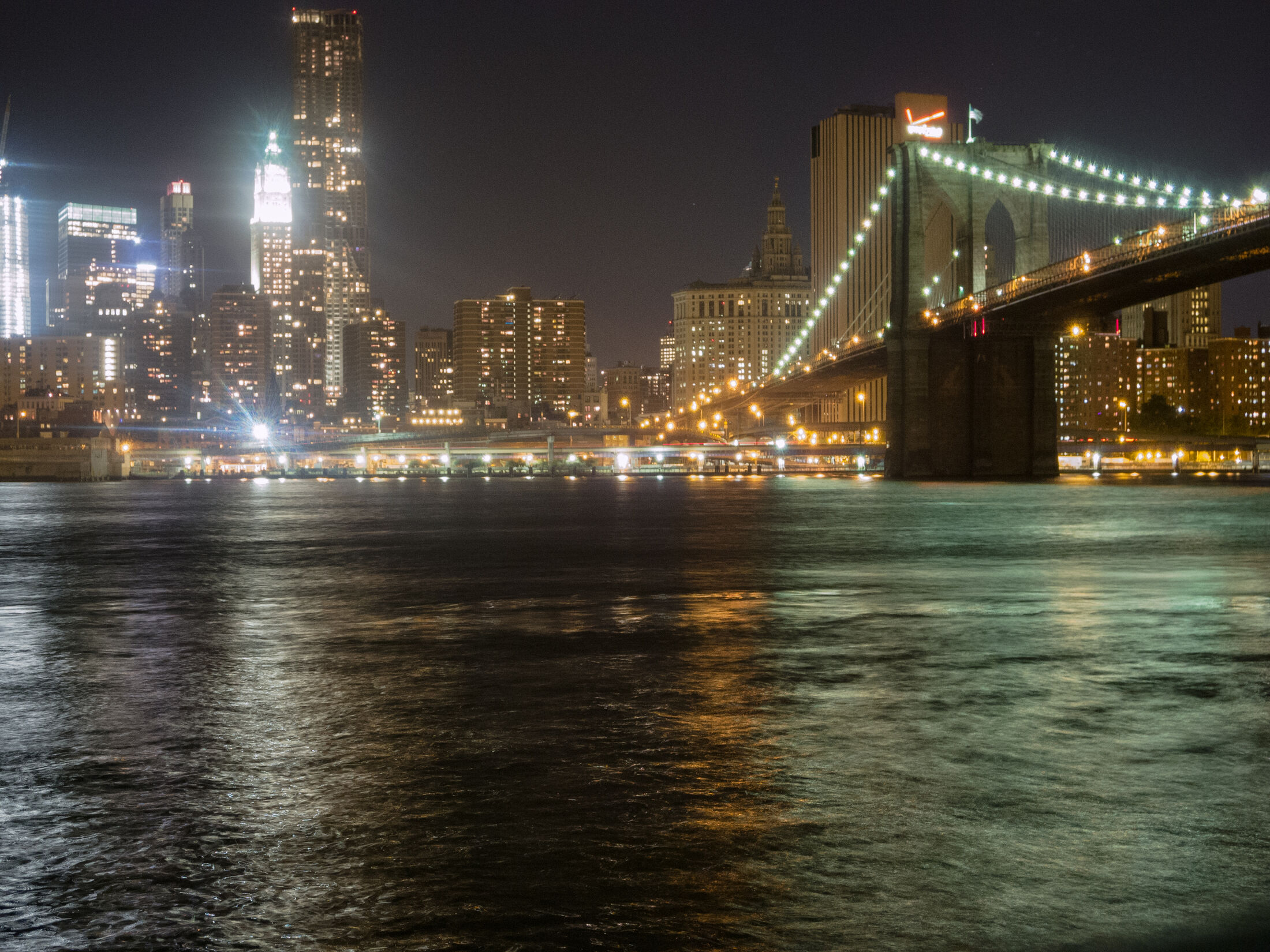
DUMBO, short for Down Under the Manhattan Bridge Overpass, is the waterfront district in northwest Brooklyn set between the Brooklyn and Manhattan Bridges and running down to the East River. For about a century it was a working manufacturing zone of warehouses and factories, many built in reinforced concrete around the turn of the twentieth century. Those buildings were later converted into residential lofts and offices, and in 2007 the Landmarks Preservation Commission designated the DUMBO Historic District, which covers 91 buildings on portions of 17 blocks. The neighboring Fulton Ferry Historic District, at the old ferry landing, dates to 1977. Brooklyn Bridge Park, an 85-acre park along 1.3 miles of shoreline, frames the area to the west. Belgian block paving and old freight rail tracks still run through several streets. The F stops at York Street, the A and C at High Street, and NYC Ferry serves the landing at the foot of Old Fulton Street.
Homes and buildings in DUMBO
Housing here is almost entirely apartments. The core is converted industrial lofts with high ceilings, oversized windows, and exposed concrete columns or timber beams, joined by newer condominium buildings along the waterfront and near the bridges. Townhouses are rare. Because the historic district governs exterior changes to most of the older loft buildings, new construction tends to sit at the edges or on former industrial and parking lots. Most buildings are condominiums rather than co-ops, which affects financing, board review, and how quickly a sale can close.
Streets, parks and landmarks
The blocks are a grid of brick and concrete warehouses set against two bridge spans, with the Manhattan Bridge tower framed at the end of Washington Street. Ground floors hold galleries, design studios, shops, and restaurants. Empire Stores, a row of nineteenth-century warehouses on the water, now houses offices and retail, and Jane's Carousel, built in 1922 and restored, turns inside a glass pavilion at the river's edge. Subway trains crossing the Manhattan Bridge are part of the soundscape on some streets.
Selling in DUMBO
In a loft market, light and views carry the price. Units with direct sightlines to the Brooklyn Bridge, the Manhattan Bridge, or the Lower Manhattan skyline sit in a different bracket, and buyers will ask exactly which rooms see what, so document views with photos taken at different times of day. Ceiling height, original columns, beams, and window size are the details worth naming. Be candid about bridge noise and show any soundproofing or window upgrades. Brooklyn homes sold faster in 2026 than in years, which rewards a prepared, accurately priced launch.
Compass market data: Compass counts DUMBO in its Northwest Brooklyn submarket. In Q3 2026 the Northwest Brooklyn submarket’s median sale price was $1,570,000 (+0.3% on a year earlier), on 755 closed sales (−1.6%). Source: Compass Brooklyn Market Report Q3 2026 (data: REBNY RLS, ACRIS). NYC market data →
Get Gavin’s report for your building: recent sales in your line and nearby, and what they mean for your price. Free, no obligation.
Buying in DUMBO
Confirm whether a building sits inside the DUMBO or Fulton Ferry Historic District, since exterior work then needs Landmarks Preservation Commission review. Ask about flood zone status, flood insurance, and where the building's mechanical systems sit, because parts of the area are close to the waterline. Review the condominium's reserve fund and any planned facade or window projects, which older loft conversions need from time to time.
DUMBO: frequently asked questions
Is DUMBO a landmarked neighborhood?
Much of it is. The Landmarks Preservation Commission designated the DUMBO Historic District in December 2007, covering 91 buildings on portions of 17 blocks between and around the two bridges. The smaller Fulton Ferry Historic District at the old ferry landing was designated in 1977. Inside these districts, changes to facades, windows, and rooftops need commission approval, which protects the streetscape and the industrial character that buyers come for.
What kind of homes are in DUMBO?
Mostly apartments. The signature product is the converted loft, carved out of former warehouses and factories, with tall ceilings, big windows, and exposed concrete or timber structure. Newer condominium buildings line the waterfront and the edges of the historic district. Townhouses are scarce, and most buildings are condominiums rather than co-ops, which generally means a lighter board process and more flexible financing than in many Brooklyn co-op buildings.
What transit serves DUMBO?
The F train stops at York Street at the eastern side of the neighborhood, and the A and C trains stop at High Street near the Brooklyn Bridge approach. NYC Ferry serves the landing at the foot of Old Fulton Street, which connects to Wall Street and other East River stops. The Brooklyn Bridge walkway and the Manhattan Bridge bike and pedestrian paths both start within a few blocks.
What adds value when selling a DUMBO loft?
Views come first: buyers pay for direct sightlines to the bridges or the Manhattan skyline, so show them clearly and say which rooms have them. Next come loft details such as ceiling height, original columns and beams, and window size. A clean condominium with healthy reserves and no pending facade assessments also helps. Honest disclosure of bridge noise, paired with proof of window or acoustic upgrades, keeps negotiations on track.
Sources: hdc.org, new.mta.info. Neighborhood boundaries are customary and vary by source. Updated October 2026.
More in Brooklyn