
Market · 17 questions

Buying & Selling NYC Townhouses and Brownstones: Landmarks, Taxes, Investment

Townhouses and brownstones are their own market in New York, with their own rules. Here are clear answers on landmark approvals, multi-family houses, rent-stabilized tenants, inspections and renovation, property taxes and air rights. This is general information, not legal or tax advice. For a specific house, Gavin can walk you through what matters and who else should be on your team.

Gavin Hammon
Answered by Gavin HammonLicensed Associate Real Estate Broker at Compass · 17 years in Manhattan & Brooklyn · About Gavin

How do you buy a townhouse in New York City?

Buying a townhouse works like buying a house, not an apartment: no co-op board, but far more due diligence. After your offer is accepted, your attorney reviews title, the certificate of occupancy and any open Department of Buildings violations, while you hire an engineer or inspector familiar with older buildings. Check whether the house is landmarked, how many legal units it has and whether any tenants are protected. Contracts in NYC are typically signed after this review, with about a 10% deposit. Gavin can coordinate the process and recommend specialists.
Buying in New York? Buy with Gavin →
How do you sell a townhouse or brownstone in NYC?

Start with accurate pricing, because townhouses have fewer direct comparables than apartments; value depends on width, depth, condition, legal unit count, outdoor space and whether the house is delivered vacant. Gather documents early: the certificate of occupancy, renovation permits and sign-offs, leases and rent registrations for any tenants, and records of major repairs. Clearing open violations before listing avoids delays. Professional photography, floor plans and targeted marketing to townhouse buyers matter. Gavin can prepare a valuation and marketing plan for your house.
Thinking about selling? How Gavin sells New York homes →

What is a brownstone?

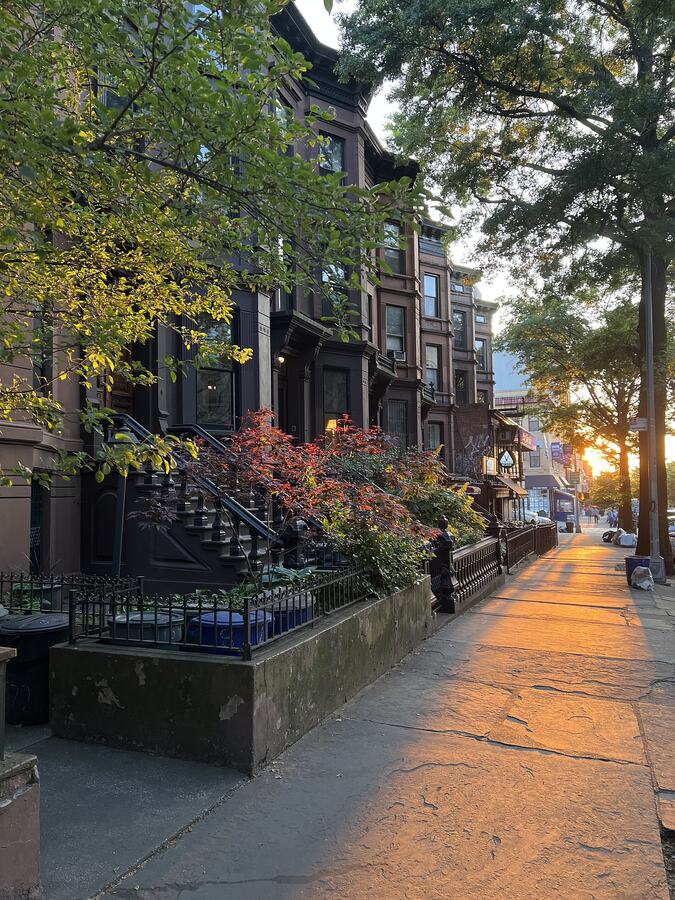
A brownstone is a row house faced with brown sandstone, a building material popular in New York in the mid-to-late 1800s. In everyday use, New Yorkers often call almost any attached 19th-century row house a brownstone, even when the facade is brick or limestone. The classic layout is three to five stories with a raised stoop leading to a parlor floor, a garden level below and bedrooms above. Many are in historic districts. Sandstone weathers over time, so facade condition is a key inspection item.
Buying in New York? Buy with Gavin →
What is the difference between a brownstone and a townhouse?

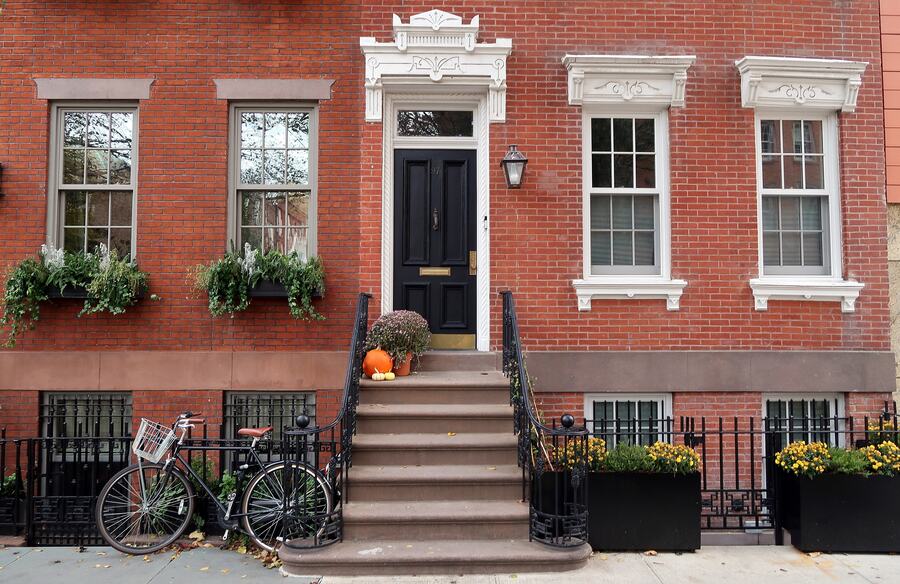
Brownstone describes a facade material; townhouse describes a building type. A townhouse is an attached single-family or small multi-family house, usually sharing walls with its neighbors. Brownstones are townhouses faced with brown sandstone, but townhouses can also be brick, limestone or modern construction. In listings the terms are often used loosely, so look at the details that affect value: width, depth, number of stories, legal unit count, condition and outdoor space.
Buying in New York? Buy with Gavin →

What does it mean if a house is in a landmark district?

It means the building sits in a historic district designated by the NYC Landmarks Preservation Commission, and most exterior changes, and some interior work that needs a building permit, require LPC review first. That covers windows, doors, facades, stoops, rooftop and rear additions. Owners must also keep the building in good repair. Designation protects the character of the block, which many buyers value, but it can add time and cost to renovations. You can check a property's status on the LPC map.
Buying in New York? Buy with Gavin →

Do I need LPC approval to renovate a landmarked townhouse?

Often, yes. The LPC issues three main types of permits. A Certificate of No Effect covers work that needs a Buildings permit but does not affect protected features. A Permit for Minor Work covers smaller exterior changes such as window replacement. A Certificate of Appropriateness covers major changes such as visible rooftop or rear-yard additions and usually requires a public hearing. Interior-only work typically needs no LPC review unless it requires a DOB permit. Work with an architect experienced with LPC.
Buying in New York? Buy with Gavin →

How do I check if a building is landmarked in NYC?

Use the Landmarks Preservation Commission's online Discover NYC Landmarks map, which shows individual landmarks and historic district boundaries. The city's ZoLa zoning map also flags landmark status for each lot. Ask your attorney to confirm designation and any open LPC violations during due diligence, because unapproved past work can become the buyer's problem. Some areas may be calendared for designation, which triggers review even before a final vote.
Buying in New York? Buy with Gavin →

What should I know about buying a two- to four-family house in NYC?

Two- to four-family houses let owners live in one unit and rent the others, offsetting carrying costs. Houses with one to four units can typically be financed with residential mortgages, and lenders may count part of the rental income. Confirm the legal number of units on the certificate of occupancy, because illegal units create financing, insurance and liability issues. Review all leases and check whether any unit is rent-regulated. One- to three-family houses are usually taxed as Class 1; four units generally fall into Class 2.
Buying in New York? Buy with Gavin →

What happens if a building I buy has rent-stabilized tenants?

Rent-stabilized tenants keep their protections when a building sells; the new owner takes on the leases and rent registrations. Stabilization generally applies to buildings with six or more units built before 1974, though tax-benefit programs and older rent-control rules can also apply. Since the 2019 Housing Stability and Tenant Protection Act, it is much harder to deregulate units or recover them for owner use. Check HCR building records and each unit's rent history, and have an experienced attorney review before signing.
Buying in New York? Buy with Gavin →

Can I convert a multi-family brownstone into a single-family home?

Often yes, but it requires planning. A conversion typically needs architectural plans, a Department of Buildings permit and a new certificate of occupancy, plus LPC approval if exterior work is involved in a landmark district. The larger constraint is often tenants: occupied units, especially rent-regulated ones, cannot simply be emptied. Many buyers seek houses delivered vacant for this reason. Conversions can change property tax class and resale appeal. Consult an architect and attorney before buying with conversion in mind.
Buying in New York? Buy with Gavin →

What should an inspection of an old NYC townhouse cover?

Hire an engineer or inspector experienced with 19th-century row houses. Key items include the facade and stoop, the roof and parapets, structural beams and joists, water infiltration and drainage, and party walls shared with neighbors. Check the age and capacity of electrical, plumbing, heating and gas systems, which may include knob-and-tube wiring or old boilers. Ask about lead paint, asbestos and the sewer line. Your attorney should separately check open DOB and LPC violations and the certificate of occupancy.
Buying in New York? Buy with Gavin →

How much does it cost to renovate a brownstone?

Costs vary too widely for a reliable rule of thumb. Scope is the biggest factor: cosmetic updates, a gut renovation with new systems, or a structural project with an extension are very different budgets. Old-building conditions, LPC requirements, permits and filing fees, architect and engineer fees, and contractor availability all add cost and time, and projects often run longer than planned. Get estimates from an architect and at least two contractors experienced with row houses before you buy, and build a contingency into your budget.
Buying in New York? Buy with Gavin →

Are NYC townhouses a good investment?

It depends on how you use the house and your timeline. Owner-occupied townhouses are usually bought for space, privacy and long-term appreciation rather than rental yield. Multi-family townhouses produce income, but cap rates in prime Manhattan and brownstone Brooklyn are typically modest because purchase prices are high relative to rents, and rent-regulated units limit upside. Operating costs, including taxes, insurance and repairs to older buildings, matter. For a specific property, underwrite actual rents and expenses, and consult your financial advisor.
Have a question about your situation? Ask Gavin directly →

How are property taxes calculated on a NYC townhouse?

Most one- to three-family houses are in Tax Class 1. The Department of Finance estimates market value, and assessed value is set at 6% of that. By state law, a Class 1 assessed value cannot rise more than 6% in a year or 20% over five years, unless physical changes such as an addition are made. Your bill is the taxable value, after exemptions, multiplied by the current Class 1 tax rate. As a result, Class 1 taxes are often low relative to market value, especially for long-held houses.
Buying in New York? Buy with Gavin →

What are air rights, and does my townhouse have any?

Air rights, formally called unused development rights, are the difference between the floor area zoning allows on a lot and what is already built. If zoning permits more floor area than your house uses, the excess may be sold to an adjacent property through a zoning lot merger, or occasionally used to expand. Many townhouses have little or none, and in historic districts LPC review still applies. You can check zoning on ZoLa; a zoning attorney or architect should confirm what is transferable.
Want the numbers for your own home? Request a private valuation →

How much does a brownstone cost in Brooklyn?

Prices vary enormously by neighborhood, width, condition, and whether the house is single-family or multi-family and delivered vacant. A renovated single-family house in Brooklyn Heights or Park Slope is in a very different price range from a house that needs a full renovation elsewhere in Brooklyn. Recent closed sales are public on the city's ACRIS database. Gavin can pull recent comparable townhouse sales for the neighborhoods you are considering.
Buying in New York? Buy with Gavin →

What does delivered vacant mean for a townhouse?

Delivered vacant means the seller transfers the property with no tenants or occupants at closing, and buyers typically pay more for that. With a vacant house you can move in, renovate or re-rent on your own terms. If a house is sold with tenants, the leases, and any rent-regulated protections, pass to the buyer. When a listing says it will be delivered vacant, confirm how and when that will happen, make it a contract condition, and ask your attorney to verify tenancy and rent-regulation status through HCR records.
Thinking about selling? How Gavin sells New York homes →

Your question isn’t here? Ask Gavin.

Personal answers in English and French, usually the same day.

Request a private valuationAsk a question