Manhattan · Midtown Manhattan
Hell's Kitchen (Midtown West) real estate guide
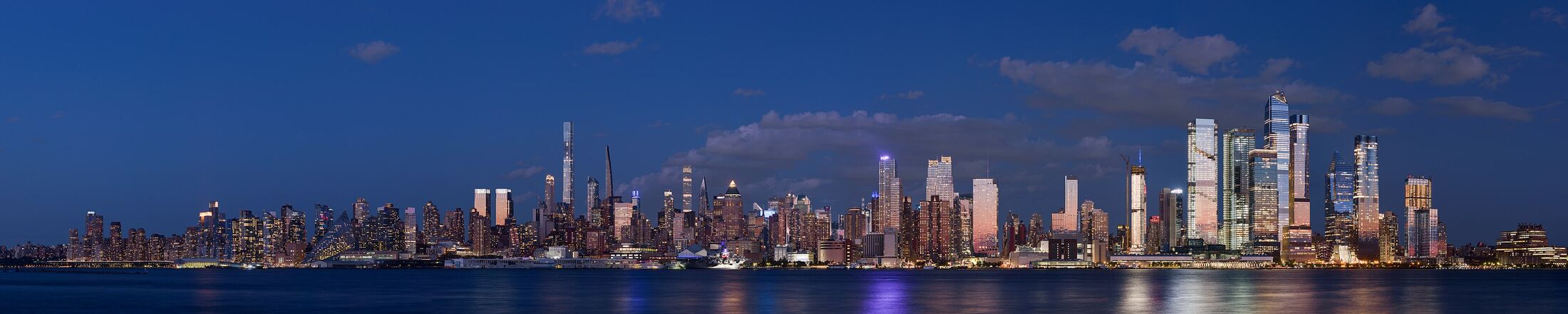
Hell's Kitchen, also called Clinton and often marketed as Midtown West, is the West Side neighborhood running from about 34th Street to 59th Street between Eighth Avenue and the Hudson River. It grew in the nineteenth century around the docks, rail yards and factories of the West Side, and much of its housing dates from that era as tenements and walk-up row buildings. In 1974 the city created the Special Clinton District, a zoning district that limits building heights on many midblock streets and protects the low rise core. At the same time, the edges have changed dramatically: the 7 train reached 34 St to Hudson Yards in 2015, and new towers have risen along Eleventh Avenue, West 42nd Street and the Hudson Yards area. The Theater District sits just to the east, and Hudson River Park, DeWitt Clinton Park and the Intrepid Museum line the west.
Homes and buildings in Hell's Kitchen (Midtown West)
Hell's Kitchen has two distinct housing stocks. The midblock streets are lined with nineteenth and early twentieth century walk-up tenements and rowhouses, a mix of rentals, small co-ops and condo conversions. The avenues and the western edge carry full service rental towers, postwar co-ops, large complexes such as Manhattan Plaza, and new condominiums with amenity packages and Hudson River views. Townhouses exist but are uncommon.
Streets, parks and landmarks
The neighborhood's texture changes as you walk west. Ninth and Tenth Avenues are lined with restaurants and small shops, and West 46th Street between Eighth and Ninth is known as Restaurant Row. Theaters spill over from the Theater District to the east. Toward the river, the scale rises with new towers, and Hudson River Park, the Intrepid at Pier 86 and DeWitt Clinton Park provide waterfront and recreational space. Traffic around the Lincoln Tunnel approaches and the Port Authority shapes some blocks.
Selling in Hell's Kitchen (Midtown West)
In Hell's Kitchen, the walk-up versus elevator distinction drives value more than almost anything else, followed by floor, light and outdoor space. Sellers of walk-up units benefit from emphasizing renovation quality, in-unit laundry if permitted, and private outdoor space. In new development, Hudson River and skyline views, amenity access and monthly carrying costs are compared closely against competing towers. Proximity to the 7, A, C and E lines and distance from the tunnel approaches both show up in pricing, so precise location is worth stating plainly.
Compass market data: Compass counts Hell's Kitchen (Midtown West) in its Midtown West submarket. In Q3 2026 the Midtown West submarket’s median sale price was $982,500 (+4.0% on a year earlier), on 114 closed sales (+0.9%). Source: Compass Manhattan Market Report Q3 2026 (data: REBNY RLS, ACRIS). NYC market data →
Get Gavin’s report for your building: recent sales in your line and nearby, and what they mean for your price. Free, no obligation.
Buying in Hell's Kitchen (Midtown West)
Check whether a building falls within the Special Clinton District, since its zoning limits on height and alterations affect future development nearby and renovation plans. Many older buildings are walk-ups, so floor level matters for daily life and resale. In new condominiums, review the offering plan, tax abatement schedule and any remaining sponsor units. Blocks near the Lincoln Tunnel, Port Authority and West Side Highway are worth visiting at rush hour.
Hell's Kitchen (Midtown West): frequently asked questions
What are the boundaries of Hell's Kitchen?
Hell's Kitchen is generally defined as the area from 34th Street north to 59th Street, between Eighth Avenue and the Hudson River. The city's official name for the neighborhood is Clinton, adopted in 1959, and real estate listings often use Midtown West. The southern blocks near 34th Street overlap with the Hudson Yards area, and the Theater District lies directly to the east.
What is the Special Clinton District?
The Special Clinton District is a zoning district adopted by the City Planning Commission in 1974 to preserve the low rise residential core of Hell's Kitchen. In its Preservation Area, midblock building heights are limited to 66 feet or seven stories, whichever is less, and there are additional rules on demolition and alteration. Other subareas allow more density, particularly along the avenues and the western edge.
What subway lines serve Hell's Kitchen?
The A, C and E run along Eighth Avenue with stations at 34th Street, 42nd Street and 50th Street. The 1 stops at 50th Street and Broadway, and 59 St to Columbus Circle adds the A, B, C, D and 1 at the north end. Since 2015 the 7 has run to 34 St to Hudson Yards, serving the southwest corner. The Port Authority Bus Terminal and crosstown buses on 34th, 42nd, 49th, 50th and 57th Streets round out the network.
Is Hell's Kitchen the same as Midtown West?
In practice the terms overlap heavily. Hell's Kitchen is the historic name, Clinton is the name used in city planning since 1959, and Midtown West is a real estate label that often includes Hell's Kitchen along with nearby blocks closer to Times Square and Hudson Yards. When comparing listings, it helps to look at the exact cross streets and avenues rather than the label.
Sources: zr.planning.nyc.gov, nycgovparks.org, new.mta.info, communityprofiles.planning.nyc.gov. Neighborhood boundaries are customary and vary by source. Updated October 2026.
More in Midtown Manhattan